
Air conditioner not blowing cold air: common causes and fixes
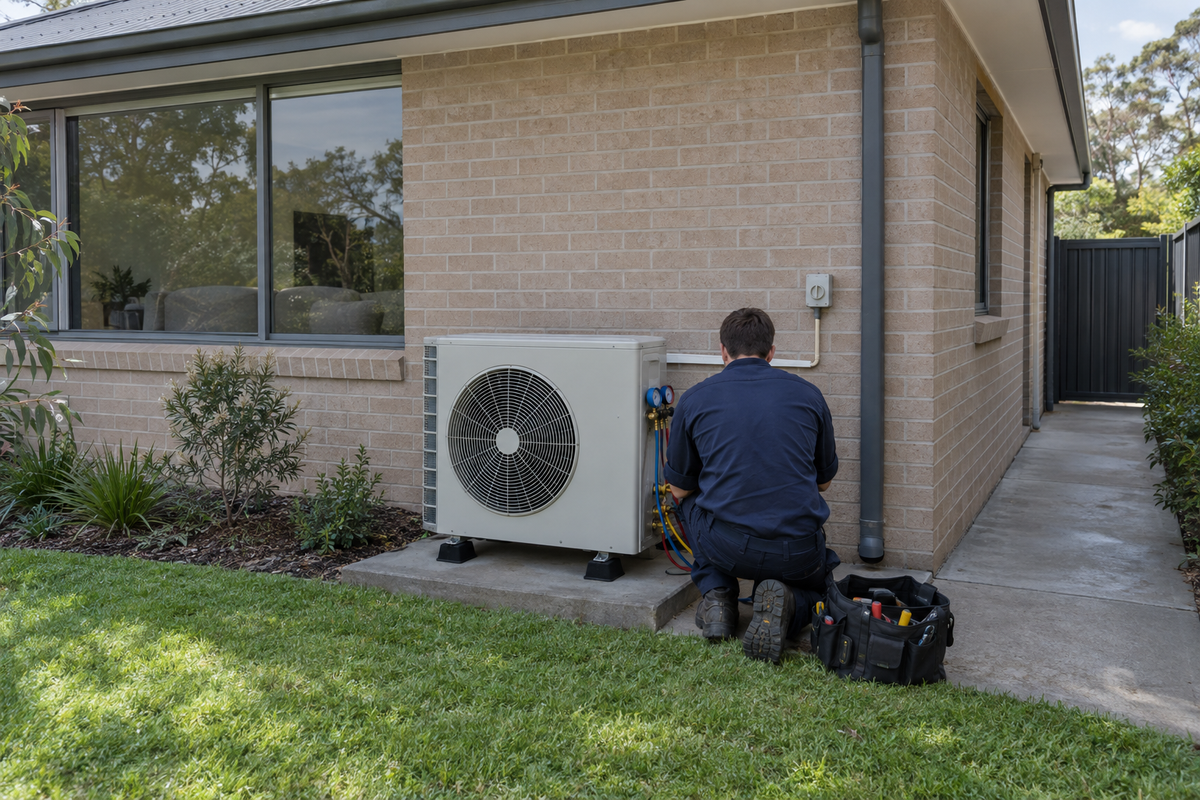
An air conditioner not blowing cold air is usually caused by restricted airflow, a failed start capacitor, or a refrigerant leak. Start by checking for a blocked return air filter or a tripped circuit breaker in your switchboard. If the outdoor unit is not running or the copper pipes are iced over, the system likely requires a professional [air conditioning repair](/services/air-conditioning-repairs) to address mechanical failure or gas levels.
Why airflow blockages are the first thing to check
When a system stops cooling, the most frequent culprit is a simple lack of airflow. An air conditioner works by moving heat, not by creating cold. It pulls warm air from your room, passes it over a freezing cold evaporator coil, and then pushes that cooled air back into the space. If the return air filter is choked with dust, pet dander, or skin cells, the fan cannot pull enough air across the coil. This leads to a rapid drop in the coil temperature, often causing it to freeze into a solid block of ice, which further blocks any air from passing through. In many Australian homes, especially those with high ceilings or open-plan living areas, the return air grille can accumulate significant debris in just a few months.
You should inspect your return air filter by sliding it out of the wall or ceiling frame. If you cannot see light through the mesh when holding it up to a window, it is too dirty. Beyond the filter, internal blockages can occur if furniture is placed too close to the indoor unit or if the evaporator coil itself has become matted with dust that bypassed a poorly fitted filter. A system with restricted airflow will sound like it is straining, often producing a louder, more turbulent 'whooshing' noise while the air coming out of the vents feels tepid or weak. Cleaning the filter is a task homeowners can perform, but if the internal coil is blocked, a professional air conditioning service is required to chemically clean the fins and restore heat transfer efficiency.
Identifying electrical component failure in the outdoor unit
If your indoor unit is blowing air but that air is at room temperature, the problem often lies in the outdoor condenser unit. This unit houses the compressor—the heart of the cooling cycle—and the condenser fan. In the heat of an Australian summer, the most common component to fail is the start or run capacitor. This small, cylindrical device acts like a battery to provide the high-voltage jolt needed to kick-start the compressor motor. Capacitors are sensitive to heat and power surges; once they fail, the compressor will not start, even though the indoor fan continues to run. You might hear a faint humming or clicking sound from the outdoor unit every few minutes as the system tries and fails to engage the compressor.
Testing a capacitor involves working with high-voltage electricity and should never be attempted by an unlicensed person. An installer will use a multimeter to check the microfarad rating against the specification printed on the casing. If the outdoor fan is spinning but the compressor is not, or vice versa, it is a clear sign of an electrical component failure. In some cases, a gecko or other small animal may have crawled onto the inverter board, causing a short circuit. Modern inverter systems rely on complex electronics to modulate power; if these boards are damaged by heat stress or pests, the system will often display an error code on the indoor unit or wall controller. Identifying these codes is the first step in a diagnostic visit to determine if a simple component replacement or a more significant board repair is necessary.
How dirty coils and outdoor obstructions kill cooling capacity
The outdoor unit needs to dump the heat it has collected from inside your home into the outside air. To do this, it uses a large coil and a powerful fan. If this coil is covered in dirt, salt spray in a coastal climate, or garden debris, the heat cannot escape. This causes the refrigerant temperature and pressure to skyrocket. Most modern units have high-pressure safety switches that will shut the compressor down to prevent it from burning out. If your AC starts blowing cold air but turns warm after 15 or 20 minutes, it is likely overheating due to poor heat rejection at the condenser.
Clearance is another major factor often overlooked during landscaping or home renovations. An outdoor unit requires at least 500mm of clear space in front of the fan and around the intake coils to breathe properly. If you have built a deck, a screen, or planted thick hedges around the unit, you are effectively recirculating the hot exhaust air back into the system. In a dry inland zone where summer temperatures regularly exceed 40°C, even a slightly dirty coil can be enough to push a system over its thermal limit. We often see units tucked into narrow side passages between a house and a fence where the heat builds up until the system reaches a 'thermal lockout' state. Regular hosing of the outdoor coils with low-pressure water can help, but avoid using a high-pressure washer as this can flatten the delicate aluminium fins and permanently restrict airflow.
The reality of refrigerant leaks and low gas levels
A common misconception is that air conditioners 'consume' gas and need an annual top-up. In reality, a cooling system is a sealed loop. If the refrigerant level is low, it means there is a leak that must be found and repaired. When gas levels drop, the pressure in the evaporator coil falls below the design threshold. This causes the temperature of the coil to drop well below zero, leading to ice formation. You might notice ice on the brass valves at the outdoor unit or water dripping from the indoor unit as the ice melts and overflows the drain tray. While the system may still blow some cool air initially, the lack of refrigerant means it cannot move enough heat to lower the room temperature effectively.
Operating a system that is low on refrigerant is dangerous for the compressor. The refrigerant actually carries the oil that lubricates the compressor's internal moving parts; without enough gas flow, the compressor can overheat and seize. If you suspect a leak, look for oily patches around the copper pipe joins, which indicates where the gas and oil are escaping. Repairing a leak involves recovering the remaining refrigerant, pressure testing the lines with nitrogen to find the hole, repairing the pipework, and then vacuuming the system before weighing in a fresh charge of R32 or R410A. This is a highly regulated process that requires a refrigerant handling licence. For those in the capital of New South Wales, we offer specialised Sydney air conditioning repairs to tackle these complex gas and pressure issues.
Compressor stress and thermal overload in extreme conditions
Australian summers put immense stress on mechanical components. When the ambient temperature hits 42°C and your outdoor unit is sitting on a dark tiled roof or a concrete slab in the sun, the internal temperature of the compressor can reach critical levels. Most compressors are equipped with an internal thermal overload switch that cuts power if the windings get too hot. If your AC is not blowing cold air during the hottest part of the afternoon but starts working again in the evening, the compressor is likely struggling with the heat load. This can be exacerbated by an undersized system that is forced to run at 100% capacity for hours on end without a break.
Construction materials also play a role in how hard your compressor has to work. A home built with double brick and no ceiling insulation will hold onto heat far longer than a modern build with R4.0 batts and reflective sarking. If the heat gain of the building exceeds the kilowatt cooling capacity of the unit, the air coming out of the vents might be 12°C cooler than the intake, but the room temperature will not drop because the 'cool' is being absorbed by the hot walls and ceiling. In these scenarios, the system is not technically broken, but it is mismatched to the environment. We often find that older split system air conditioning units installed ten years ago no longer cope with modern heatwaves, especially if the outdoor fan motor has slowed down due to age, reducing the volume of air moved across the condenser.
Ductwork integrity and the loss of conditioned air
In ducted systems, the problem might not be the air conditioner itself, but the delivery system. If your outdoor unit is huming along and the indoor unit is running, but the air coming from the ceiling vents is weak or warm, you may have a breach in your ductwork. Flexible ducting is often run through roof cavities where temperatures can exceed 60°C. If a duct has slipped off its starter ring or has been chewed by a possum or rat, the cold air is being dumped into your roof space instead of your bedrooms. This is a common issue in older homes where the tape used to seal duct joins has dried out and failed over time.
Another point of failure in ducted systems is the zone motor or damper. These are small motorised blades inside the ducting that open and close to direct air to different rooms. If a zone motor fails in the closed position, that room will receive no air at all, or only a tiny amount of bypass air. If the master sensor is located in a zone that isn't getting air, the system will keep running the compressor, but you won't feel the benefit. We recommend checking the 'zone' light on your wall controller; if it is flashing or showing an error, the motor may need replacement. Ensuring your ductwork is insulated to modern standards, such as R1.0 or R1.5, is vital to ensure the cold air actually reaches the vent at the temperature the system intended.
Common questions
How can I tell if my AC compressor is actually running?
Go outside to the condenser unit while the system is turned on. You should hear a distinct hum or low-frequency vibration and feel warm air being blown out of the fan. If the fan is spinning but you hear no hum, or if the unit is completely silent despite the indoor unit running, the compressor or its starting components have likely failed.
Why is there ice forming on my air conditioner's outdoor pipes?
Ice on the copper pipes usually indicates either a severe airflow restriction, such as a completely blocked filter, or a lack of refrigerant. When the pressure drops too low, the coil temperature falls below freezing, causing moisture in the air to turn to ice. You should turn the system off immediately to allow the ice to melt and prevent compressor damage.
Can a blown fuse cause the air conditioner to stop cooling?
Yes, but it is rarely just the fuse. If a circuit breaker trips or a fuse blows, it is usually because a component like the compressor or fan motor has shorted out or is drawing too much current. Simply resetting the breaker often results in it tripping again. A technician needs to find the cause of the overcurrent to ensure the system is safe to operate.
How often should I clean my filters to prevent cooling issues?
In most Australian climates, you should check and clean your return air filters every three months. If you live in a dusty inland area or have indoor pets, monthly cleaning is better. Keeping the filters clean ensures maximum airflow and prevents the evaporator coil from freezing, which is one of the most common reasons an AC stops blowing cold air.