Best ducted air conditioning

The best ducted air conditioning system is one that matches your home’s specific thermal load, electrical capacity, and zoning requirements. While brands like Daikin, Mitsubishi Electric, and ActronAir are top performers, the best choice involves balancing energy efficiency ratings with the physical constraints of your roof cavity and the local humidity or heat stress levels in your region.
Why capacity determines the best system for your home
The best ducted air conditioning is not necessarily the unit with the highest kilowatt rating or the most expensive price tag. It is the unit that is sized exactly to the thermal load of your residence. We calculate this load by looking at the building materials, the orientation of the glass, and the volume of air in each room. For example, a home built in the 1970s with double brick walls and no ceiling insulation will have a significantly higher heat gain than a modern build using lightweight cladding and R-value 4.0 batts. If you install a system that is too small, it will run at maximum frequency constantly, failing to reach the set point and wearing out the compressor prematurely. Conversely, an oversized unit will short-cycle, turning on and off rapidly, which is inefficient and hard on the electronics.
Most medium to large four-bedroom homes require between 14 kW and 16 kW of cooling capacity. However, this figure is highly dependent on the layout. A house with large west-facing windows and a dark tiled roof in a hot dry inland zone will need more power than a similar floor plan in a shaded coastal area. We also look at the electrical supply before recommending a capacity. Most residential properties have a single-phase supply, which generally limits you to systems up to 16 kW. If your home requires more capacity, you may need a three-phase power upgrade to accommodate the higher amperage draw of a 20 kW or 25 kW outdoor unit. This choice is often more cost-effective than installing multiple split system air conditioning units, which would require separate circuits and mounting points.
Evaluating energy efficiency beyond the star rating
When comparing the best systems, homeowners often look at the star rating on the sticker, but the technical data tells a more complete story. As of 2026, we focus on the Annual Energy Efficiency Ratio (AEER) and the Annual Coefficient of Performance (ACOP). These figures represent the actual efficiency of the unit across a full year of seasonal temperature fluctuations rather than a single laboratory test point. A system might look efficient at 35 degrees Celsius but lose its advantage when the temperature drops or climbs higher. Inverter technology is standard in all high-quality ducted systems, allowing the compressor to modulate its speed to match the cooling demand. This prevents the heavy energy spikes associated with old-fashioned fixed-speed compressors.
Efficiency is also tied to how the system handles the refrigerant cycle. High-end models use electronic expansion valves to precisely control the flow of refrigerant, which helps the system reach the desired temperature faster and maintain it with less electrical input. If you are prioritising long-term operational costs, you should also consider the standby power consumption. Some older or cheaper designs draw significant power even when the system is not actively cooling. We analyse these technical specifications to ensure the system we install will not lead to excessive quarterly bills. Proper maintenance is also a factor in efficiency; a clogged return air filter or a dirty outdoor coil can drop efficiency by 20% or more, regardless of how good the original unit is.
How zoning technology defines performance
A standard ducted air conditioning setup can be made significantly better by the way the air is distributed. The best systems now use Variable Air Volume (VAV) zoning. In a traditional setup, a zone is either open or closed. If you only have one bedroom turned on at night, a traditional system might struggle to dump the excess air, leading to noisy vents and drafts. A VAV system allows the dampers to open partially, and the indoor fan motor adjusts its speed to maintain the correct static pressure. This means you can have perfect comfort in a single room without the system overworking or becoming noisy.
Smart controllers are the interface for this technology. Modern interfaces allow you to set different temperatures for different rooms, which is essential for a two-storey home where the upper floor might be five degrees warmer than the ground floor due to rising heat. We often see homeowners choose a premium brand but then try to save money on the zoning hardware. This is a mistake. The controller and the damper motors are the parts you interact with every day. A high-quality zoning system like those from ActronAir or specialised third-party controllers allows for much finer control over your environment. This level of customisation helps to maximise the benefits of the inverter compressor, as the system only produces exactly as much cooling as the active zones require based on their individual temperature sensors and usage patterns.
Material quality for harsh environmental conditions
The longevity of a ducted system is dictated by the materials used in the outdoor condenser unit. In a country with diverse climates, the hardware must be able to withstand both extreme heat and coastal salt spray. The best units feature aluminium fins with specialised coatings, often referred to as Bluefin or Goldfin technology. These coatings provide a layer of protection against corrosion, which is vital for homes within five kilometres of the ocean. Without this protection, the salt air will eat away at the heat exchanger, leading to refrigerant leaks and a total system failure within a few years. We check the build quality of the chassis as well; a heavy-gauge galvanised steel casing with a high-quality powder coat will resist rust much better than cheaper, thinner alternatives.
Inside the roof cavity, the quality of the ducting is just as important. We use ducting with an R1.5 insulation rating as standard, which is thicker than the R1.0 often used in budget installations. This prevents heat gain through the duct walls as the air travels from the indoor unit to your rooms. In a dark tiled roof where temperatures can reach 70 degrees Celsius in summer, thin ducting will cause the air to warm up before it even reaches the vent. We also look for high-tensile wire in the duct construction to ensure it does not collapse or kink over time. A system is only as good as its weakest component, and using high-grade materials throughout the entire installation ensures the unit performs at its rated capacity for its full expected service life.
Physical installation requirements and roof constraints
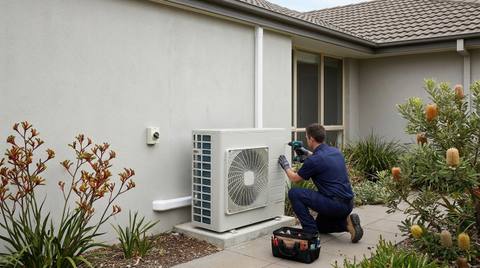
Before deciding on the best brand, we must assess the physical space available in your home. Some premium indoor units are quite large and may not fit through a standard manhole or between the roof trusses of a modern home with a low pitch. If the roof space is tight, we look for 'slimline' or 'two-piece' indoor units that can be manoeuvred into position and reassembled. The placement of the outdoor unit is also a technical consideration. It needs sufficient clearance for airflow to discharge heat effectively. If the outdoor unit is tucked into a narrow side passage between a brick house and a fence, it may recirculate its own hot air, causing the high-pressure switch to trip and the system to shut down during a heatwave.
We also have to consider the condensate drainage and the refrigerant pipe runs. If the indoor unit is located far from the outdoor unit, the compressor has to work harder to move the oil and refrigerant, which can impact performance. For those looking for ducted air conditioning in Sydney, we often find that older terrace houses or narrow blocks require creative solutions for duct routing, sometimes involving bulkheads or vertical risers. The return air grille placement is another critical factor; it must be located in a central area where it can draw air back from all the conditioned zones without creating a 'whistling' noise. Getting these physical details right is what separates a high-performing system from one that is constantly plagued by minor issues or poor airflow noise.
Brand selection based on specific residential needs
While we install many brands, three typically stand out for different reasons. Daikin is often chosen for its extensive service network and the reliability of its swing compressors, which have fewer moving parts than traditional rotary designs. Mitsubishi Electric is frequently selected for its extremely quiet indoor fans, making it a preferred choice for bedrooms and quiet study areas. ActronAir, being designed for local conditions, often performs better in extreme heat. Their units are tested to operate in ambient temperatures up to 50 degrees Celsius, whereas some imported brands begin to derate their capacity once the mercury hits 43 or 45 degrees. You can view our product catalogue for specifications on these different models.
Your choice should also consider the warranty and the availability of spare parts. A brand might be the 'best' in terms of price, but if a simple sensor failure takes three weeks to repair because parts are shipped from overseas, it is a poor investment. We prioritise brands that maintain a local warehouse and a dedicated technical support team. The best system for a Darwin install fights humidity where a Canberra one fights winter, so the local climate should always dictate the final brand choice. We look at the total value proposition: the initial purchase price, the energy costs over ten years, and the likelihood of needing major repairs. By balancing these factors, we can recommend a system that provides consistent comfort without becoming a financial burden through high maintenance or warranty support.
Common questions
Which brand of ducted air conditioning is the most reliable?
Reliability is generally highest in brands that have established local support and parts distribution. Daikin and Mitsubishi Electric are consistently rated highly by installers for their build quality and low failure rates. ActronAir is also a top contender, particularly because their systems are designed to handle the extreme heat cycles common in many parts of the country.
How much does it cost to install the best ducted air conditioning?
A high-quality ducted installation for a standard four-bedroom home typically ranges from $8,000 to $20,000. This price varies based on the kilowatt capacity, the number of zones, the complexity of the roof space, and whether you require a three-phase power upgrade to support a larger outdoor compressor unit.
Should I choose a single-phase or three-phase ducted system?
This depends on the size of your home. Most systems up to 16 kW can run on single-phase power, which is standard for most residences. However, for homes requiring 18 kW or more, a three-phase system is often better as it distributes the electrical load more evenly and is generally more efficient for larger compressors.
Is zoning worth the extra cost in a ducted system?
Zoning is essential for managing energy costs and individual comfort. By only cooling the rooms you are using, you reduce the load on the compressor and save on electricity. Advanced VAV zoning also allows for different temperatures in different rooms, which is critical for multi-storey homes or houses with varying sunlight exposure.
How long should a high-quality ducted air conditioner last?
With regular annual servicing, a premium ducted system should last between 10 and 15 years. Factors that decrease this lifespan include salt air corrosion in coastal areas, lack of filter maintenance, and installing an undersized unit that is forced to run at maximum capacity for extended periods during summer.
For more detail, read our ducted air conditioning guide.