Best temperature for air conditioning in winter

The best temperature for air conditioning in winter is between 18°C and 20°C. Setting your reverse cycle system within this range provides a comfortable indoor environment while maximising energy efficiency. Every degree you increase the thermostat above 20°C can add approximately 10% to your heating costs, making moderate settings essential for managing winter electricity bills.
Why 18 to 20 degrees is the efficiency sweet spot
Setting your thermostat to 18°C or 20°C might seem low when the morning frost is thick on the lawn, but this range is the technical sweet spot for reverse cycle performance. A reverse cycle system works by extracting heat from the outdoor air and moving it inside. As the outdoor temperature drops, the system has to work harder to find that heat. By keeping the indoor target moderate, you reduce the pressure on the compressor. This prevents the unit from running at high speed for extended periods, which is where the bulk of your electricity consumption occurs.
In the air conditioning industry, we often refer to the 10% rule. For every single degree you push the thermostat above 20°C in winter, you typically add 10% to the energy consumption of that unit. If you set your system to 24°C instead of 20°C, you could effectively be nearly doubling the cost of heating that room. This is particularly noticeable with a split system air conditioning unit in a single room, where the temperature can rise quickly but the energy spike is immediate. Keeping the setting at 19°C and wearing a jumper is a far more cost-effective strategy for long-term winter comfort.
The efficiency of these systems is measured by their Coefficient of Performance (COP). Most modern units installed as of 2026 have a COP of around 3 to 4, meaning for every kilowatt of electricity used, they produce three to four kilowatts of heat. However, this COP drops as the temperature setting increases or the outdoor temperature plummets. By staying in the 18°C to 20°C range, you allow the inverter technology to find a steady, low-power state that maintains warmth without the heavy-cycling that wears out components and inflates bills.
How Australian home construction impacts heat retention
Australian homes vary wildly in their ability to hold onto the heat your air conditioner produces. A 1970s brick veneer home with no wall insulation and original single-pane windows will lose heat almost as fast as a system can pump it in. In these environments, setting the air conditioner to a higher temperature is often a reactive move to counteract drafts, but it is inefficient. Heat follows the path of least resistance, escaping through uninsulated ceilings and gaps under doors. If your home has a dark tiled roof with no sarking, the roof cavity stays cold, which further chills the ceiling and forces the air conditioner to work harder.
Newer builds with a 7-star energy rating or higher behave differently. These homes often feature better R-values in the ceiling insulation—typically R4.1 or higher—and better-sealed window frames. In a well-insulated home, an 18°C setting feels significantly warmer than the same setting in a drafty weatherboard cottage because the internal wall surfaces are not as cold. When we assess a home for ducted air conditioning, we look at these construction factors first. A home with high thermal mass, like double brick or internal stone features, will take longer to warm up but will hold that 20°C temperature much longer once the system is turned off.
Glass is another major factor. Even in a modern home, large expanses of glass act as a heat sink. In winter, the heat inside is drawn toward the cold glass. Using heavy curtains or honeycombed blinds can help retain the warmth, allowing you to keep the air conditioner at 18°C without feeling a chill. Without these measures, you might find yourself bumping the thermostat to 22°C or 23°C just to feel comfortable, which significantly increases the load on your outdoor unit and shortens its operational lifespan due to the constant high-load demand.
Balancing comfort and running costs in different climates
The ideal winter temperature setting also depends on the local climate and humidity levels. A home in Hobart faces a different challenge to one in Perth or Darwin. While a Canberra winter requires the system to fight off sub-zero overnight temperatures, the air is often dry. In contrast, coastal areas deal with high humidity which can lead to frost build-up on the outdoor unit’s heat exchanger. When this happens, the unit must enter a 'defrost cycle,' reversing the flow of refrigerant to melt the ice. During this time, the indoor unit will stop blowing warm air.
If you set your temperature too high—say 24°C—in a frosty, humid climate, the unit will work at maximum capacity to reach that target. This high-intensity operation makes the outdoor coil even colder, which accelerates ice build-up and triggers more frequent defrost cycles. You end up in a loop where the system spends a third of its time defrosting rather than heating your home. By lowering the target to 19°C, the system can run more gently, reducing the frequency of these interruptions and providing a more consistent heat flow.
Inland regional areas with dry, piercing cold often see the best results from leaving the system on a steady 18°C throughout the day rather than turning it off and on. This 'low and slow' approach prevents the house from 'cold-soaking,' where the furniture and walls drop to the ambient outdoor temperature. Reheating a cold-soaked house from 5°C up to 20°C takes a massive amount of energy compared to simply maintaining 18°C with a modern inverter system that can throttle down to 30% capacity once the target is reached.
The role of inverter technology in winter performance
Modern air conditioners use inverter technology, which is designed to be smart about how it reaches a target temperature. Older non-inverter units were either 100% on or 100% off. When you set an old unit to 20°C, it would blast hot air until the sensor hit 20°C, then shut down. The temperature would then drop to 18°C before it kicked back in again. This 'yo-yo' effect is incredibly inefficient. Modern inverters work more like a car's accelerator; they ramp up to get close to the target, then ease off to maintain it.
Setting the thermostat to 30°C in an attempt to heat the room 'faster' is a common mistake. The system will blow air at the same maximum temperature regardless of whether you set it to 22°C or 30°C. All the higher setting does is tell the inverter to keep the pedal to the floor for longer. This bypasses the efficiency gains the inverter is designed to provide. If you leave the setting at 20°C, the system will still use its maximum available power to reach that mark, but it will then gracefully transition into a maintenance mode that uses a fraction of the electricity.
If your system seems to be struggling to reach even a modest 20°C, it may not be a setting issue but a mechanical one. Low refrigerant levels or a failing sensor can cause the unit to run constantly without ever providing sufficient heat. In these cases, continuing to push the thermostat higher will only result in a massive power bill without any increase in comfort. This is when you should book an air conditioning repairs specialist to check the system’s pressures and sensor accuracy to ensure the inverter can actually do its job effectively.
Managing airflow and fan settings for better heating
How the air moves around the room is just as important as the number on the screen. Because warm air is less dense than cold air, it naturally rises toward the ceiling. If your air conditioner's louvres are pointing straight out or upwards, the warmest air will stay trapped at the top of the room while your feet remain cold. This often leads people to turn the thermostat up to 24°C just to feel the warmth at seated height. Instead, you should manually set the horizontal louvres to point downwards. This forces the warm air toward the floor, where it will then naturally rise through the 'living zone' of the room.
Fan speed also plays a role in winter efficiency. While 'Auto' fan mode is generally the most efficient, some people find the changing noise distracting. If you prefer a manual setting, a medium fan speed is usually better than a high speed for heating. High fan speeds can sometimes make the air feel like a 'cool breeze' if the heat exchanger hasn't reached full temperature yet. A slower, more concentrated stream of warm air directed at the floor is often more effective at warming the thermal mass of the room, such as the rug or the sofa, which then helps radiate heat back into the space.
For those with ducted systems, zoning is the ultimate tool for winter efficiency. You do not need to heat the entire house to 20°C if you are only using the lounge room. By closing off zones in unused bedrooms, you allow the system to reach the target temperature in the active areas much faster. This reduces the overall load on the compressor and allows it to drop into its low-power maintenance state sooner. Just ensure that at least one or two zones remain open to prevent back-pressure issues in the ductwork, which can lead to noisy registers and reduced motor life.
Maintenance tasks that keep winter heating efficient
A system that is choked with dust will never be efficient, no matter what temperature you set. In winter, the indoor filters are working hard to pull air through the return air grille. If these filters are blocked, the airflow is restricted, and the heat exchanger can't transfer its heat to the room effectively. This causes the indoor unit to overheat internally and the outdoor compressor to work harder to compensate. We recommend cleaning your filters at the start of every winter season to ensure unimpeded airflow.
The outdoor unit also needs attention. During autumn, deciduous trees drop leaves that can accumulate around the base of the outdoor unit or even get sucked into the coil. For a reverse cycle system to heat your home, it must be able to pull vast amounts of air through that outdoor coil. If the coil is blocked by leaves, spider webs, or debris, the efficiency drops off a cliff. Keeping a clear one-metre zone around your outdoor unit is one of the simplest ways to ensure your 18°C setting actually feels like 18°C.
If it has been more than two years since your last professional check, a regular air conditioning service is a wise investment before the peak of winter. A technician will check the 'superheat' and 'subcooling' temperatures, which are technical indicators of how well the refrigerant is performing. They will also check the electrical connections; winter heating puts a high sustained load on the wiring, and any loose terminals can generate heat and become a fire risk. A clean, well-maintained system is significantly quieter and cheaper to run than one that has been neglected for years.
Night-time settings and sleeping temperatures
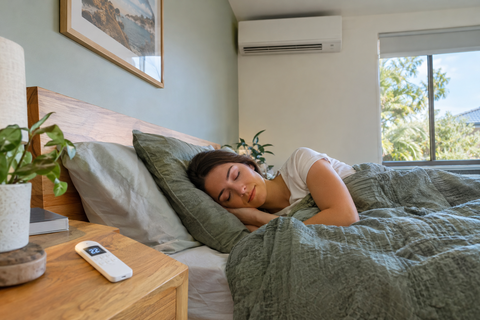
Sleeping in a room that is too hot is generally detrimental to sleep quality. Most sleep experts suggest that the human body prefers a cooler environment for rest, typically between 17°C and 19°C. From an air conditioning perspective, this is excellent news for your power bill. You can comfortably set your winter night-time temperature to 17°C or 18°C. Many modern units have a 'Sleep' or 'Night' mode that will automatically drop the temperature by a degree or two over a few hours, mimicking the natural drop in outdoor temperature and your body's circadian rhythm.
Using a timer is another effective strategy. Rather than running the unit all night, you can set it to turn off an hour after you go to bed and turn back on an hour before you wake up. If your home has decent insulation, the temperature will not drop too drastically overnight. This avoids the cost of running the compressor during the coldest part of the night (usually 3:00 AM to 5:00 AM) when the system is at its least efficient because the outdoor air has very little heat left to extract.
For those with smart controllers, you can even program the system based on the outdoor ambient temperature. If the forecast is for a particularly heavy frost, you might choose to leave the system on a very low 16°C 'anti-freeze' setting just to keep the chill out of the walls. This prevents the system from having to work at 100% capacity at 7:00 AM to make the house habitable. Managing your winter temperatures is a balance of physics, construction reality, and habit. By sticking to the 18°C to 20°C range, you ensure that your home remains a sanctuary without the shock of a massive electricity bill at the end of the season.
Common questions
Is 24 degrees too high for air conditioning in winter?
Yes, 24°C is generally considered too high for efficient winter heating in Australia. Every degree above 20°C increases energy consumption by about 10%. Setting it to 24°C can result in a power bill that is 40% higher than if you had set it to a more moderate 20°C.
Why does my air conditioner stop blowing warm air occasionally in winter?
This is usually the 'defrost cycle'. When it is cold and humid outside, ice forms on the outdoor unit's coils. The system must stop heating the indoors and reverse the flow to melt that ice. This is a normal part of operation for reverse cycle systems in winter.
Will setting the AC to 30 degrees heat my room faster?
No, setting the temperature to 30°C will not heat the room any faster than setting it to 20°C. The system provides the same maximum heat output regardless of the target. A higher setting only means the system will run at maximum power for longer, wasting energy.
What is the best air conditioning temperature for sleeping in winter?
The ideal sleeping temperature is typically between 17°C and 19°C. This range supports the body's natural cooling process during sleep while ensuring the room doesn't become uncomfortably cold. Using a 'Sleep' mode on your air conditioner can help manage this automatically throughout the night.
How often should I clean my AC filters during winter?
You should check and clean your filters at least once at the start of the winter season. If you use the system daily or have pets that shed hair, monthly cleaning is recommended. Clean filters ensure maximum airflow and help the system maintain your target temperature more efficiently.