What to do about dripping water from aircon units?
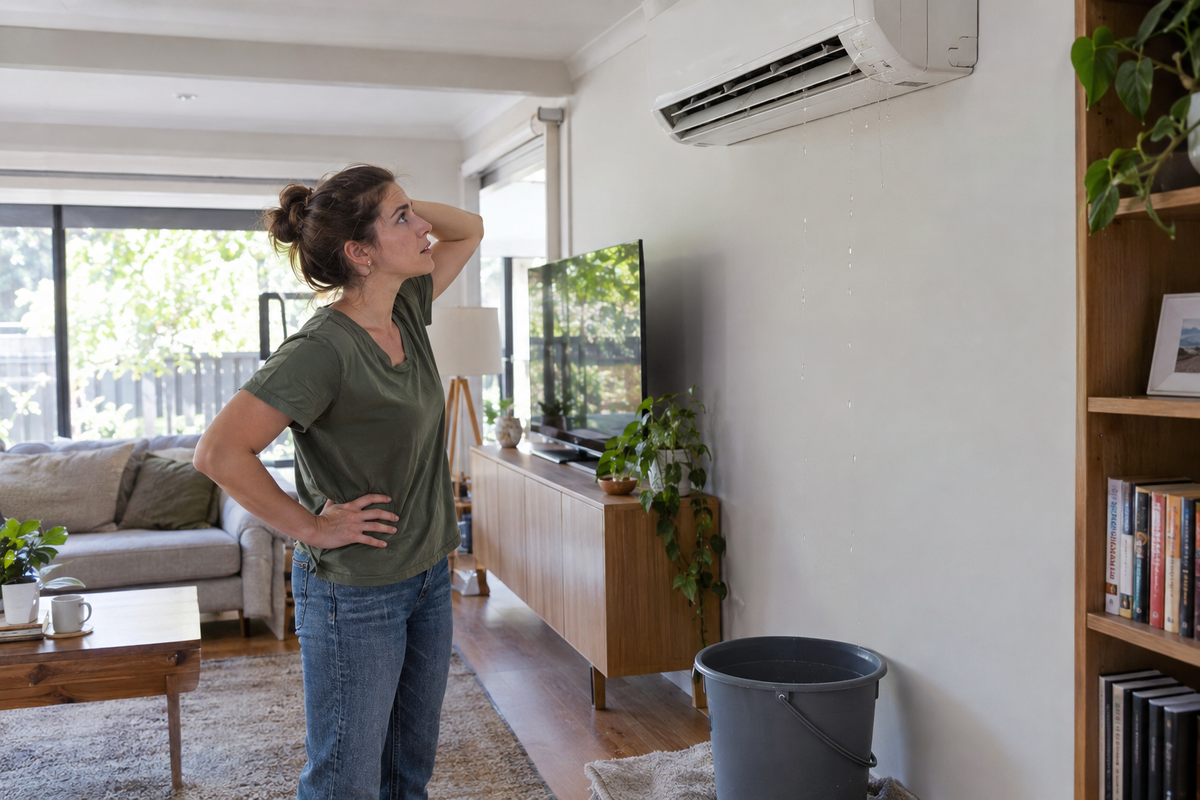
Dripping water from aircon units is usually caused by a blocked condensate drain line, frozen evaporator coils, or a cracked drain pan. While your system naturally generates water through dehumidification, this moisture should be directed outside via a dedicated PVC pipe. If water is leaking into your home, you should turn the system off immediately to prevent ceiling and plasterboard damage.
The physics of condensation in Australian climates
To understand why a unit is leaking, you first need to understand that every air conditioner is essentially a large dehumidifier. When warm, humid air from your living room passes over the cold evaporator coils, the moisture in that air hits its dew point and transforms into liquid water. This is a normal part of the refrigeration cycle. In a humid coastal climate, such as the tropical conditions found in Darwin or Cairns, a standard residential split system can pull between two and five litres of water from the air every hour. This water is collected in a plastic tray called a condensate pan, which sits directly beneath the coils.
In a correctly functioning system, this water flows by gravity through a 15mm or 20mm PVC pipe to an appropriate discharge point, usually a garden bed or a floor waste. However, when the volume of water produced exceeds the system's ability to drain it, or if the drainage path is obstructed, that water has nowhere to go but over the sides of the pan. In a split system, this results in water running down your internal wall. In a ducted system located in a roof cavity, it can lead to water pooling on your ceiling, which often causes significant structural damage before it is even noticed.
Monitoring the discharge at your external drain line is a good way to check system health. If you are running the air conditioning on a humid day and the external pipe is bone dry while the internal unit is dripping, you have a definitive drainage failure. This is often the first sign that you need to book air conditioning repairs to prevent further damage to your home's interior finishes.
How blocked condensate drains cause internal leaks
The most frequent cause of dripping water from aircon units is a blockage in the condensate drain line. Over time, the environment inside your air conditioner becomes a breeding ground for a specific type of biological growth. Dust, skin cells, and pollen are pulled into the unit and mix with the standing water in the drain pan. This creates a thick, jelly-like sludge or algae. Because the PVC drain pipes used in Australian homes are relatively narrow, it does not take much of this biological build-up to completely seal the pipe.
Once the pipe is blocked, the water backs up into the internal unit. In many modern split systems, the drain pan is integrated into the chassis, meaning an overflow will spill directly out of the front or bottom of the casing. In ducted systems, we often see blockages caused by debris that has bypassed a poorly maintained filter. If your home has a dark tiled roof or a Colorbond roof, the temperatures in the roof cavity can reach 60 to 70 degrees Celsius in mid-summer. These high temperatures accelerate the growth of mould and algae within the moist environment of the drain pan.
Clearing these blockages usually requires a professional technician to flush the line using high-pressure nitrogen or a specialised vacuum. We often see homeowners attempt to clear these lines with wire coat hangers, but this frequently results in a cracked PVC joint inside the wall, which is far more expensive to repair than a simple blockage. Regular air conditioning service includes a chemical treatment of the drain pan to kill these biological growths before they can form a blockage.
Why frozen evaporator coils lead to water damage
If you see ice forming on your indoor unit or notice water dripping only after you have turned the system off, you likely have a frozen evaporator coil. A coil freezes when the temperature of the refrigerant inside the copper pipes drops below zero degrees Celsius, causing the condensation on the outside of the pipes to turn into ice. This is not normal and is usually caused by one of two things: restricted airflow or low refrigerant levels.
Airflow restriction is the most common culprit. If your return air filters are clogged with dust, the system cannot pull enough warm air over the coils to keep them above freezing. The ice layer continues to grow until it completely blocks the coil. When you eventually turn the system off, this large block of ice melts rapidly. The volume of water produced by a melting ice block often exceeds the capacity of the drain pan and the drain line, leading to a major leak.
Low refrigerant is the second major cause. When a system loses gas through a small leak, the pressure drops, which in turn drops the temperature of the remaining refrigerant. This causes the coil to freeze even if the filters are clean. If you suspect your system is freezing, turn it off immediately and switch it to 'fan only' mode. This will help melt the ice safely while you wait for a technician. Running a frozen system can lead to liquid slugging, which can permanently destroy the compressor, a part that typically costs between $2,000 and $4,500 to replace in 2026.
The role of the condensate pump in modern apartments
In many modern Australian apartments or multi-storey homes, the air conditioner is located in a position where a gravity-fed drain is impossible. For example, if a split system air conditioning unit is installed on an internal wall far from an outside window, the water cannot flow downhill to a discharge point. In these scenarios, we install a small mechanical device called a condensate pump. These pumps are usually hidden inside the unit's casing or in a small plastic box next to the unit.
These pumps are a common failure point. They contain a small float switch; when the water reaches a certain level, the pump activates and pushes the water through a small-bore tube to a remote drain. If the pump motor fails or the float switch gets stuck due to algae, the pump will not activate. Because these pumps have very small reservoirs, they will overflow almost immediately once they stop working.
If your system uses a pump, you will often hear a faint clicking or humming sound when the pump is running. If that sound stops or becomes unusually loud and grinding, the pump is likely nearing the end of its life. Replacing a condensate pump is a standard repair task, usually costing between $350 and $600 including parts and labour as of 2026. If you are building a new home or renovating, we always recommend gravity drains over pumps where possible, as gravity never suffers a mechanical failure.
Damaged drain pans and insulation failure
While most modern air conditioners use plastic drain pans, older units and some high-capacity commercial-style systems use metal pans. In a coastal environment where salt air is prevalent, these metal pans can rust through over a decade of service. Even a pinhole leak in a drain pan will result in water dripping directly into the ceiling space or down the wall. In ducted air conditioning installations, we install a secondary 'safety tray' under the main unit. This tray is designed to catch water if the primary pan fails or the main drain blocks. If you see water dripping from a pipe over a window or doorway (the 'tell-tale' pipe), it means your primary drain is blocked and the safety tray is doing its job.
Another cause of dripping is the failure of pipe insulation. The copper pipes carrying refrigerant are extremely cold. If the black foam insulation (armaflex) on these pipes is torn, missing, or has degraded due to UV exposure or rodents in the roof, the pipes will 'sweat' just like a cold drink can on a hot day. This condensation forms on the outside of the insulation and drips off.
In homes with high-pitched roofs and large voids, rodents often nest near the indoor unit because it is a source of warmth and water. They frequently chew through the insulation, leading to mystery drips that appear to come from the middle of a pipe run rather than the unit itself. Repairing this involves stripping the old insulation and applying new, high-rated foam, ensuring all joints are glued and taped to prevent air from reaching the cold copper.
Installation errors and the importance of pitch
Sometimes, dripping water from aircon units is the result of a poor installation rather than a mechanical fault. For water to move, there must be a consistent downward slope. A split system indoor unit must be mounted perfectly level or with a very slight tilt toward the drain hole. If the unit is tilted away from the drain, water will pool in the opposite end of the pan until it overflows. We often see this in older weatherboard homes that have settled or shifted over time, causing a once-level unit to lose its pitch.
In ducted systems, the 'p-trap' is a critical component. This is a U-shaped bend in the drain pipe that holds a small amount of water to prevent sewer gases or smells from being sucked into the air conditioning system. If this trap is not designed correctly, or if the 'fall' of the pipe is too shallow, the negative pressure created by the indoor fan can actually suck water back into the unit instead of letting it drain away. This is known as 'trap blow-out' or 'air-locking'.
Correcting these issues often requires re-mounting the indoor unit or re-plumbing the drain line in the roof cavity. It is a technical job that requires an understanding of fluid dynamics and the specific requirements of Australian standards. If you are experiencing leaks in a brand-new system, it is almost certainly an installation or commissioning error. Ensuring your installer has checked the drain by pouring a known quantity of water through the pan (a 'bucket test') is a standard part of a professional commissioning process.
Common questions
Is it safe to run my air conditioner if it is dripping water?
It is generally not recommended. While the water itself is not high-voltage, a leak can short out internal electronics or damage your home's structure. In a ducted system, a leak can lead to a collapsed ceiling. It is best to turn the system off at the isolation switch until a technician can inspect the drainage path.
Can I use a vacuum to clear a blocked aircon drain?
You can sometimes use a wet-dry vacuum on the external end of the drain pipe to pull out a blockage. However, this is often a temporary fix as it does not remove the algae build-up inside the internal pan. A professional service uses specialised chemicals to ensure the blockage does not return within a few weeks.
How much does it cost to fix a leaking air conditioner?
For a standard drain clear or minor repair, prices typically range from $180 to $350 as of 2026. If the issue is a failed condensate pump or a refrigerant leak causing frozen coils, the cost can rise to between $400 and $900 depending on the parts required and the complexity of the access.
Why is my air conditioner leaking water outside?
Water dripping from the external drain pipe is perfectly normal and shows the system is working. However, if water is leaking from the bottom of the outdoor compressor unit itself, it may be normal defrosting (in winter) or a sign of a cracked fitting. In a city like Brisbane or Perth, high humidity will naturally increase the amount of water you see outside.