Why your split system air conditioner is leaking water inside?
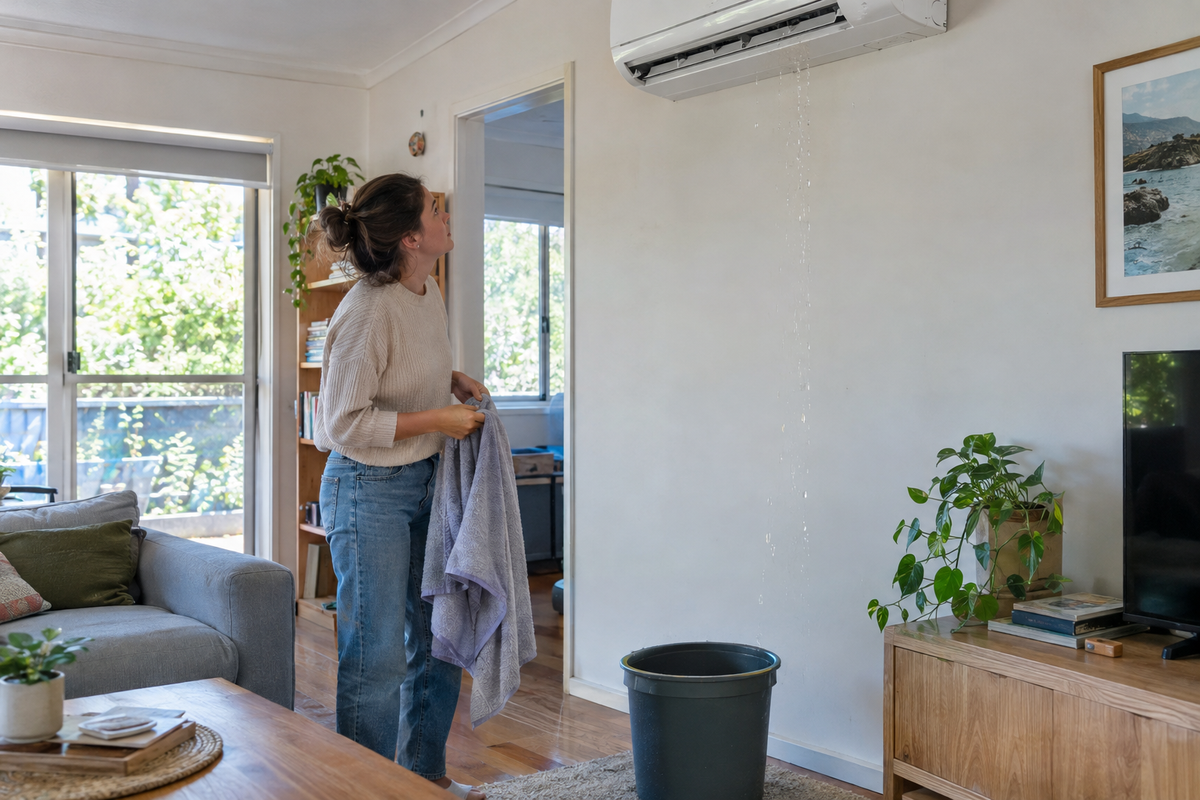
A split system air conditioner leaking water inside is usually caused by a blocked condensate drain line, a dirty evaporator coil, or a cracked drain pan. When the system cools, it extracts moisture from the air which must drain outside. If the path is blocked by dust, debris, or algae, the water overflows the internal tray and runs down your wall.
Why humidity turns into an indoor leak
To understand why a split system is leaking water inside your home, you first have to understand that every air conditioner is also a dehumidifier. When the unit is running in cooling mode, the indoor evaporator coil becomes very cold, typically hovering between 2 and 5 degrees Celsius. As the warm, humid air from your room is pulled across this cold aluminium coil, the moisture in the air condenses into liquid water. This is exactly the same process as a cold drink can 'sweating' on a hot afternoon.
In a humid coastal climate, a standard 2.5 kW or 3.5 kW split system can pull several litres of water out of the air every single day. This water is designed to be caught in a plastic channel called a condensate tray or drain pan, located directly beneath the evaporator coil. From there, gravity should carry the water through a dedicated drain pipe to the outside of the building. If you see water dripping from the indoor unit, it means this water-management system has failed, and the liquid is taking the path of least resistance over the edge of the tray and down your wall.
This is not just a mess; it is a risk to your building's structure. Water leaking behind the unit can damage plasterboard, encourage the growth of mould, and even interfere with the electrical connections of the unit itself. If you notice a leak, the first step is to turn the system off at the isolation switch to prevent further water production and electrical hazards until the cause is identified. Regular air conditioning service is the most effective way to prevent these drainage failures before they start.
How blocked drain lines cause overflows
The most common reason for a split system leaking water inside is a blockage in the condensate drain line. This pipe is usually a 20mm PVC tube or a flexible corrugated hose that runs from the indoor head unit, through the wall, and out to a garden bed or a dedicated drain point. Over time, the mixture of dust that bypasses the filters and the constant presence of moisture creates a perfect environment for biological growth. A thick, jelly-like 'slug' of algae or mould can form inside the pipe, eventually acting like a plug.
In many Australian homes, particularly those in tropical or high-humidity regions, insects also contribute to these blockages. Mud-wasps are notorious for building nests inside the small opening of the drain pipe where it exits the house. Because the pipe is small and often has several bends to navigate the wall cavity, even a small obstruction can cause water to back up quickly. Once the pipe is full, the water has nowhere to go but back into the indoor unit's drain pan, which then overflows.
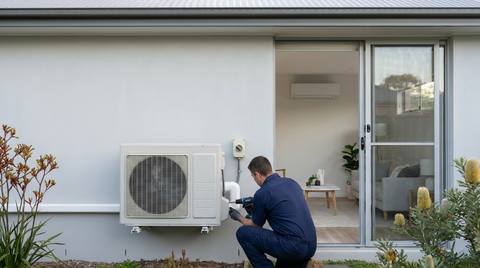
Clearing these blockages usually requires more than just a poke with a wire. Professional technicians often use a wet-dry vacuum to pull the obstruction through from the outside, or a high-pressure CO2 flush to clear the line from the inside. If the blockage is caused by a build-up of organic matter, we often use anti-fungal tablets in the drain pan to prevent the algae from returning. This is a standard part of a professional split system air conditioning maintenance visit, ensuring the drainage path remains clear for the peak of summer.
The link between dirty filters and ice buildup
If the filters on your split system are not cleaned regularly, the unit can actually start to freeze, which leads to a significant leak when the ice eventually thaws. The air conditioner relies on a constant flow of room-temperature air passing over the cold evaporator coil to transfer heat. If the filters are caked in dust, the airflow is restricted. Without enough warm air to keep the coil temperature above freezing, the condensate water on the fins turns into a layer of ice.
This ice acts as an insulator, making the problem worse until the entire indoor coil is a solid block of frost. When you turn the unit off, or when it enters a defrost cycle, that large volume of ice melts all at once. The sheer volume of water produced by a melting ice block often exceeds the capacity of the drain pan and the drain pipe, causing a heavy flow of water to spill out of the unit's casing. This is a common issue in older homes where the unit might be positioned in a high-traffic area with more airborne dust.
Beyond the leak, a frozen coil puts immense strain on the compressor. If you notice ice forming on the copper pipes at the outdoor unit or see frost behind the louvres of the indoor unit, it is a clear sign of an airflow or refrigerant issue. Keeping your filters clean is a simple task for any homeowner, but if the coil continues to freeze despite clean filters, it may indicate a more serious problem with the refrigerant charge or the indoor fan motor that requires air conditioning repairs to resolve.
Identifying cracks in the condensate tray
While less common than a simple blockage, the plastic components inside your split system can fail over time. The condensate tray is made of lightweight plastic that must endure constant cycles of getting wet and drying out, along with temperature fluctuations. In older units, or those installed in areas with high UV exposure or extreme heat stress, this plastic can become brittle and develop hairline cracks. Even a tiny crack can allow water to seep through the bottom of the tray and run down the wall behind the unit.
In some cases, the leak is not from a crack but from a failure of the insulation. The internal components of a split system are heavily insulated to prevent 'sweating' on the outside of the plastic casing. If this insulation becomes saturated due to a previous blockage, or if it is damaged by rodents, the cold air inside the unit will cause the external plastic housing to condense water from the room. This looks like a leak, but it is actually the entire unit sweating because it can no longer maintain its thermal barrier.
Replacing a drain pan is a complex job that involves almost entirely dismantling the indoor unit. For systems that are more than ten years old, a cracked tray often signals that the plastics throughout the unit are reaching the end of their life. We often find that in harsh environments, such as a dark tiled roof house in a hot dry inland zone, the internal plastics degrade faster than in more temperate climates. In these instances, we weigh the cost of the repair against the benefit of a newer, more efficient model.
Why installation angles and levelling matter
An air conditioner is a precision instrument that relies on basic physics to move water. The indoor unit must be installed perfectly level, or with a very slight tilt toward the side where the drain pipe exits. If the unit is tilted away from the drain hole, water will pool at the 'high' end of the tray. Eventually, the water level will rise until it spills over the back of the tray before it ever reaches the drain pipe. This is often the cause of leaks in newly installed systems or in homes that have experienced significant settling.
In weatherboard homes or houses built on reactive clay soils, the walls can move slightly over the seasons. This movement can be enough to throw a split system out of level. Furthermore, the drain pipe itself must have a consistent 'fall' of at least 1:100. If the pipe sags in the wall cavity or under the floor, it creates a 'P-trap' effect where water sits in the low point. This standing water becomes a breeding ground for the algae mentioned earlier and creates air-lock issues that prevent the tray from draining properly.
Another installation-related issue involves the hole through the wall. If the hole is not sealed correctly with masta-check or a similar sealant, rainwater from the outside can actually track along the pipes and enter the home, appearing as though the unit is leaking. When we perform a sydney air conditioning service, we check the integrity of these wall penetrations and the level of the indoor head to ensure that the geometry of the drainage system is still functioning as intended.
When low refrigerant causes water issues
It may seem counter-intuitive, but a lack of refrigerant gas can actually cause your air conditioner to leak water. When a system is low on refrigerant due to a leak in the copper pipework, the pressure inside the evaporator coil drops. This drop in pressure causes the coil to operate at a much lower temperature than it was designed for. Instead of the coil being a cool 4 degrees, it might drop well below zero. This causes the moisture in the air to flash-freeze onto the coil surface.
As the ice builds up, it can bridge the gap between the coil and the plastic casing of the unit. This creates a physical bridge that allows water to bypass the drain pan entirely. Instead of dripping into the tray, the water tracks along the ice and the internal plastics, eventually dripping out of the air discharge vent or the bottom of the unit. This is often accompanied by a 'spitting' sound as the indoor fan hits the ice or as small chunks of ice are blown into the room.
A system that is low on gas will also be significantly less efficient, leading to higher power bills and poor cooling performance. If you find that your unit is leaking water and the air coming out is not particularly cold, a refrigerant leak is a likely candidate. This requires a licensed technician to find the source of the leak, repair it, and then re-gas the system to the manufacturer's specifications. This is a specialised task that goes beyond basic maintenance and is critical for the longevity of the compressor.
Common questions
Can I still run my air conditioner if it is leaking water?
It is not recommended to run an air conditioner that is leaking water inside. The water can damage your walls, flooring, and furniture. More importantly, if the water reaches the internal electrical components or the circuit board, it can cause a short circuit or permanent damage to the unit. It is best to turn the system off at the power point or isolation switch until it can be inspected by a professional.
How do I know if my AC drain is blocked?
The most obvious sign of a blocked drain is water dripping from the indoor unit's casing. You might also notice a musty or damp smell coming from the vents, which indicates standing water and mould growth inside the unit. In some cases, you may see the indoor unit 'spitting' small droplets of water into the room along with the cold air. Checking the external end of the drain pipe for water flow while the unit is running is also a good diagnostic step.
How often should I clean my split system filters to prevent leaks?
In most Australian households, you should clean your split system filters every three months. However, if you live in a particularly dusty area, have indoor pets, or use the system daily during peak summer, you should check them every month. Clean filters ensure proper airflow, which prevents the evaporator coil from freezing and subsequently causing a large water leak when it thaws. This simple maintenance task can prevent the majority of water-related issues.
Will a professional service fix a leaking air conditioner?
Yes, a professional service is designed to address the root causes of water leaks. A technician will flush the condensate drain line with high pressure, clean the evaporator coils and filters, and check the unit for proper levelling. They will also inspect the drain pan for cracks and ensure the refrigerant levels are correct. Most leaks are resolved during a standard service, though if parts like the drain pan are cracked, a specific repair quote may be required.
For more detail, read our split system air conditioning guide.