Understanding the 2.5 kW split system air conditioner

A 2.5 kW split system air conditioner is the standard capacity for cooling or heating a space of 10 to 20 square metres. This makes it the ideal choice for most Australian bedrooms, small home offices, and study areas. These units are valued for their energy efficiency and quiet operation, often requiring only a basic electrical circuit for a standard installation.
How room volume affects 2.5 kW performance
A 2.5 kW split system air conditioner is frequently labelled as the entry-level size for residential wall-mounted units. While the '2.5 kW' figure refers to the nominal cooling capacity, the actual performance in your home is dictated by the volume of air the unit must treat. In a standard Australian home with 2.4-metre ceilings, a 2.5 kW unit comfortably manages a floor area of up to 20 square metres. However, modern architectural trends often favour 2.7-metre or even 3-metre ceilings, which significantly increases the cubic metres of air in the room. When the volume increases, the unit must work longer cycles to reach the set temperature, which can lead to increased wear on the compressor.
Installers also look at the heating capacity, which is often higher than the cooling capacity in these smaller units, sometimes reaching 3.2 kW. This is a result of the efficiency of the reverse cycle heat pump process. In a humid coastal climate like Brisbane, the unit also has to work hard to remove moisture from the air, a process known as latent cooling. If the room is borderline for a 2.5 kW unit, the presence of high humidity might make a 3.5 kW model a safer choice to ensure the space remains comfortable without the unit running at 100% capacity constantly. We always recommend measuring the floor-to-ceiling height before assuming a small unit will suffice for a medium-sized bedroom.
Why insulation levels dictate system requirements
The thermal envelope of a building is the single most important factor in whether a 2.5 kW split system air conditioning unit will be effective. In older weatherboard homes built in the mid-20th century, wall insulation is often non-existent. In these structures, heat transfer through the walls is rapid, especially during a 40-degree day in a dry inland zone. Conversely, a modern brick veneer home with R2.5 wall batts and R4.0 or R6.0 ceiling insulation retains cooled air much more effectively. A 2.5 kW unit that struggles in an uninsulated 15-square-metre room will easily handle a 22-square-metre room in a high-performance, modern build.
Window orientation is the second major driver of heat load. A bedroom with a large west-facing window will absorb significant radiant heat in the late afternoon. Without external shading or high-quality double glazing, this heat gain can exceed the 2.5 kW cooling capacity of the unit. We often see homeowners disappointed with small units because the 'area guide' they followed did not account for the afternoon sun hitting a dark-coloured brick wall. If your room has significant glass area or faces west, the 2.5 kW unit may need to be stepped up to a 3.5 kW model to compensate for the solar gain, regardless of the floor area.
Electrical infrastructure and circuit loading factors
One of the primary advantages of a 2.5 kW split system is its modest electrical demand. Most units in this class have a rated power input of between 0.5 kW and 0.8 kW. This low draw means that, in many cases, the unit does not require a massive upgrade to your home's switchboard. As of 2026, Australian wiring standards (AS/NZS 3000) require a dedicated circuit for most new air conditioning installations to prevent overloading existing lighting or power circuits. However, because the current draw is low—often under 5 or 6 amps during normal operation—the wiring requirements are less intensive than those for a large ducted air conditioning system.
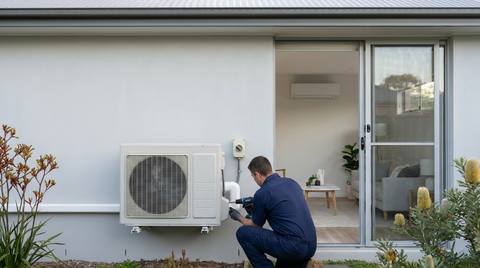
For a standard back-to-back installation, the electrician will install an isolator switch next to the outdoor compressor unit. This is a safety requirement for maintenance and emergency shut-off. If your home still has an old-fashioned fuse box with ceramic fuses, you will likely need to upgrade to modern circuit breakers and RCDs (Residual Current Devices) before the install can proceed. This can add between $400 and $800 to the total job cost. While it is tempting to look for the cheapest install price, ensuring the electrical supply is robust is vital for the long-term reliability of the inverter electronics inside the air conditioner.
Positioning for optimal airflow and drainage
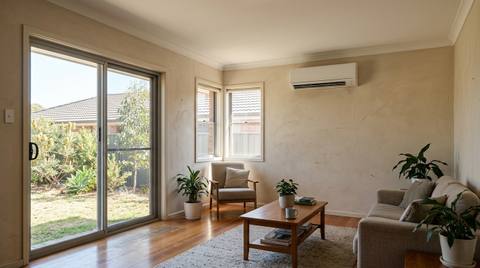
The physical placement of a 2.5 kW unit is critical because its smaller fan motor has a shorter 'throw' than larger models. In a bedroom, the unit should ideally be placed on a wall where the air can circulate across the length of the room without being blocked by wardrobes or bedheads. If the unit is placed too close to a corner, air can 'short-cycle,' where the cold air bounces off a nearby wall and returns to the unit's intake sensor, tricking the machine into thinking the room is cooler than it actually is. This results in the compressor slowing down before the entire room has reached the desired temperature.
Drainage is another technical hurdle that dictates where the unit can go. Every split system produces condensation as it removes moisture from the air. This water must drain away via gravity through a 16mm or 20mm PVC pipe. In a standard installation, the indoor unit is mounted on an external wall, allowing the drain and refrigerant pipes to pass directly outside. If you want the unit on an internal wall, a condensate pump may be required to push the water up into the roof cavity and away. These pumps add cost, require their own maintenance, and can produce a slight humming noise that might be noticeable in a quiet bedroom at night.
Comparing efficiency and noise levels across brands
When browsing a product catalogue, you will notice that 2.5 kW units often boast the highest energy efficiency ratings of any size in a brand's range. This is because the heat exchangers are generously sized relative to the small compressor. Many top-tier models now achieve extremely high efficiency markers on the Zoned Energy Rating Label. In a Mediterranean climate like Perth, these units are incredibly cheap to run, often costing less than 20 cents per hour in electricity when used at a sensible set point of 24 degrees Celsius.
Noise levels are the other major differentiator. For a bedroom, we recommend looking for units that offer a 'quiet' or 'night' mode. The most refined 2.5 kW models can operate at sound levels as low as 19 decibels, which is quieter than a human whisper. Cheaper, entry-level brands may hover around 25 to 28 decibels. While this sounds like a small difference, the decibel scale is logarithmic, meaning a 10dB increase represents a perceived doubling of loudness. If you are a light sleeper, paying a premium for a quieter Japanese-engineered brand is usually a wise trade-off. We also suggest checking the outdoor unit's noise rating, especially if the compressor will be mounted near a neighbour's window or on a wall shared with a bedroom.
Long-term maintenance and filter care requirements
Because a 2.5 kW unit has a smaller indoor coil, it can become restricted by dust and debris more quickly than a larger system. To maintain efficiency, the mesh filters behind the front panel should be vacuumed or washed every three months. If you live in a dusty area or have pets, this should be done monthly. When filters are blocked, the fan has to work harder, and the refrigerant temperature in the coil drops, which can lead to ice formation. This not only reduces cooling performance but can also lead to water leaking from the front of the unit as the ice melts and overflows the internal drain tray.
Beyond basic filter cleaning, a professional routine air conditioning service is recommended every two years. During this service, an installer will check the refrigerant gas pressures, clear the primary drain line of algae or 'slime' build-up, and treat the indoor coil with an anti-bacterial solution. This prevents the 'dirty sock' smell that can develop in humid conditions. For those living in coastal areas like Cairns, we also recommend applying a corrosion-resistant coating to the outdoor unit's aluminium fins. Salt air can eat through unprotected coils in just a few years, leading to gas leaks that are often more expensive to fix than the cost of a new unit. Investing in a split system installation in Sydney or other coastal zones requires this extra attention to environmental factors to ensure the system lasts its full expected lifespan of 10 to 15 years.
Common questions
How big a room can a 2.5 kW air conditioner cool?
In a standard Australian home with decent insulation and 2.4m ceilings, a 2.5 kW unit is rated for rooms between 10 and 20 square metres. If the room has high ceilings, large windows, or poor insulation, this capacity may be reduced to 12 or 15 square metres.
Can a 2.5 kW unit be installed on a standard power point?
While the power draw is low enough for a standard circuit, Australian electrical standards generally require a dedicated circuit and a local isolator switch for new air conditioning installations. This ensures the system does not overload existing household wiring and allows for safe maintenance.
Is 2.5 kW enough for a master bedroom?
For most master bedrooms under 20 square metres, a 2.5 kW unit is the ideal size. It provides enough power to cool the room quickly while remaining quiet and energy-efficient. However, if the master bedroom includes a large open ensuite or walk-in robe, a 3.5 kW unit might be necessary.
What is the difference between a 2.5 kW and a 3.5 kW unit?
The primary difference is the cooling and heating output. A 3.5 kW unit can move more heat per hour, making it suitable for larger rooms up to 30 square metres. While the 3.5 kW unit is more powerful, it often uses more electricity and can be slightly louder than the 2.5 kW model.
For more detail, read our split system air conditioning guide.