Choosing a 2.5 kW air conditioner for your home

A 2.5 kW air conditioner is designed for spaces between 10 and 20 square metres, making it the standard choice for bedrooms and small home offices. It provides approximately 2.5 kilowatts of cooling capacity, which is sufficient for most well-insulated Australian rooms. Performance is influenced by ceiling height, window orientation, and the specific building materials used in your home.
Why 2.5 kW is the bedroom standard
In the context of Australian residential cooling, the 2.5 kW unit is the most frequently installed capacity for individual rooms. This size generally equates to roughly 9,000 BTU (British Thermal Units) and is specifically engineered to manage the thermal load of a space between 10 and 20 square metres. For a standard 3x3 metre or 4x4 metre bedroom with a 2.4-metre ceiling, this capacity is often the ideal balance between cooling speed and energy efficiency. When we size a room, we do not just look at the floor area; we also calculate the volume of air. A room with 2.7-metre or 3-metre ceilings has a significantly higher volume of air to cool, which can push a 2.5 kW unit to its absolute limit even if the floor area is small.
Insulation plays a critical role in whether this capacity is sufficient. Most modern homes built under current energy standards will have R3.5 or R4.0 insulation in the ceiling and R2.0 in the walls. In these conditions, a 2.5 kW system can easily maintain a comfortable 24 degrees Celsius even when the outside temperature exceeds 35 degrees. However, in older homes with no wall insulation and thin ceiling batts, the heat ingress through the building envelope can overwhelm a small unit. If you are choosing a split system air conditioning unit for a room with significant heat gain, we often recommend looking at the specific orientation of the windows before confirming the capacity.
How building materials change the cooling load
The construction of your home determines how much work the compressor must do to maintain your set temperature. Brick veneer homes, which are common across the eastern states, tend to hold heat in the brickwork long after the sun has gone down. This radiant heat transfers through the cavity and into the living space. If your bedroom has a west-facing brick wall, a 2.5 kW unit will need to run at maximum frequency for longer periods during the evening. Conversely, lightweight weatherboard or cladding systems heat up quickly but also cool down rapidly once the sun sets, which can change the duty cycle of the inverter.
Roofing materials also impact the performance of small-capacity units. A dark tiled roof or a dark Colorbond roof can reach temperatures of 70 degrees Celsius in the peak of summer. Without adequate ventilation in the roof cavity, this heat sits directly above your ceiling insulation. If the insulation is compressed or missing in sections, the 2.5 kW unit will struggle to combat the heat radiating from the ceiling. We also consider the presence of eaves; many modern narrow-lot designs lack eaves, meaning the sun hits the glass directly for several hours a day. One square metre of unshaded glass can let in as much heat as a small heater, which a 2.5 kW unit may not be able to offset if the glass area is too large.
Electrical requirements and installation fundamentals
A 2.5 kW air conditioner is relatively light on electrical demand compared to larger ducted air conditioning systems, but it still requires professional electrical integration. Most 2.5 kW models draw between 3 and 5 amps during normal operation, but the start-up current and maximum load must be accounted for. According to AS/NZS 3000 electrical standards, these units usually require a dedicated circuit from the switchboard, typically protected by a 16-amp or 20-amp circuit breaker. This prevents the air conditioner from tripping the circuit when other appliances, like a vacuum cleaner or hairdryer, are used on the same general power outlet run.
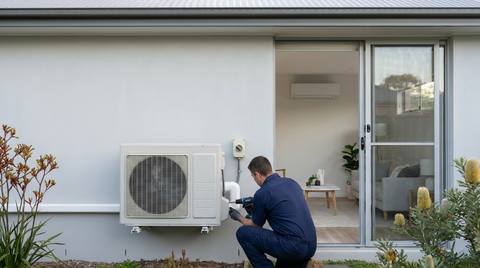
The physical installation involves mounting the indoor head unit on a wall and the outdoor condenser on a stable base. The refrigerant pipework, usually consisting of a 1/4-inch liquid line and a 3/8-inch gas line, connects the two. We prioritise keeping these runs as short as possible, often in a 'back-to-back' configuration where the outdoor unit sits directly behind the indoor unit. This minimises the amount of R32 refrigerant required and reduces the workload on the compressor. If the indoor unit must be placed on an internal wall, a condensate pump might be required to move the moisture removed from the air, as gravity drainage will not be possible. This adds a small amount of mechanical noise and an extra maintenance point to the system.
Managing humidity and coastal salt corrosion
Climate zones in Australia vary significantly, and this affects how a 2.5 kW unit performs. In a humid coastal climate, the unit spends a large portion of its energy on latent cooling—removing moisture from the air—rather than just lowering the sensible temperature. This is why you will notice the condensate drain dripping more heavily in a tropical environment. Most 2.5 kW units feature a 'Dry Mode' which prioritises dehumidification without over-cooling the room, which is particularly useful for sleeping comfort during humid nights. A unit in a dry inland zone will feel like it cools much faster because it does not have to contend with high humidity levels.
Geographic location also dictates the lifespan of the outdoor unit. For homes within five kilometres of the ocean, salt spray is a major factor in equipment failure. The aluminium fins on the outdoor heat exchanger are susceptible to galvanic corrosion, which can lead to refrigerant leaks. When selecting a 2.5 kW unit for coastal areas, we look for models with specialised coatings, often referred to as 'Blue Fin' or 'Gold Fin' protection. This is an epoxy coating applied to the coils to prevent salt from eating into the metal. For example, a Darwin install fights humidity where a Hobart one fights winter, and the hardware must be chosen to suit those specific stressors. Regular air conditioning service is essential in these environments to wash away salt build-up.
Comparing 2.5 kW to 3.5 kW systems
A common mistake homeowners make is assuming that a larger unit is always better. If you install a 3.5 kW unit in a room that only requires 2.5 kW, you may experience 'short cycling.' This occurs when the unit reaches the target temperature so quickly that it shuts off, then turns back on a few minutes later as the temperature drifts. This frequent starting and stopping is inefficient and can lead to premature wear on the compressor. Modern inverter technology allows units to ramp down their speed, but every unit has a minimum operating frequency. A 3.5 kW unit cannot always ramp down low enough for a very small room, leading to a less consistent temperature.
However, there are times when stepping up from a 2.5 kW is necessary. If the room has high raked ceilings, large unshaded windows, or if it is a home office filled with heat-generating equipment like multiple monitors and servers, the extra capacity is a safeguard. We also consider the 'Delta T'—the difference between the outside temperature and the desired inside temperature. In regions where summer temperatures regularly stay above 40 degrees for multiple days, the extra 1.0 kW of capacity provides a buffer that ensures the room stays cool when the thermal load is at its peak. You can browse various capacities in our products catalogue to see how the physical dimensions change as capacity increases.
Pricing and long-term maintenance costs
As of September 2026, the cost of a 2.5 kW split system installation generally falls into a range between $1,400 and $2,400. This price includes the hardware, which typically costs between $700 and $1,300 depending on the brand and energy efficiency features, and the professional installation labour. Labour costs are influenced by the complexity of the electrical run and the distance between the indoor and outdoor units. A simple back-to-back installation on a single-storey brick veneer home is at the lower end of the scale, while an installation requiring long pipe runs, a condensate pump, or difficult roof access will be at the higher end.
Long-term value is found in the energy efficiency of the unit. While the initial purchase price is important, the cost of running the system over ten years is often higher than the installation cost. A 2.5 kW unit is generally very cheap to run, often costing less than 15 to 20 cents per hour of operation at standard electricity rates. To maintain this efficiency, the filters must be cleaned every three months to ensure airflow is not restricted. If you are in the New South Wales capital, our Sydney split system air conditioning team can provide a detailed on-site assessment to ensure the 2.5 kW capacity is the correct choice for your specific room layout and building materials.
Common questions
What size room is a 2.5 kW air conditioner for?
A 2.5 kW air conditioner is generally suitable for rooms between 10 and 20 square metres. This includes most standard Australian bedrooms, nurseries, and small home offices. If the room has high ceilings or large windows, the effective cooling area may be closer to the 10-square-metre mark.
How much does it cost to run a 2.5 kW air conditioner?
On average, a 2.5 kW unit costs between 10 and 20 cents per hour to run, depending on your electricity tariff and the set temperature. Because they use inverter technology, they are highly efficient for maintaining temperature in small spaces compared to larger capacity systems.
Can a 2.5 kW air conditioner cool a lounge room?
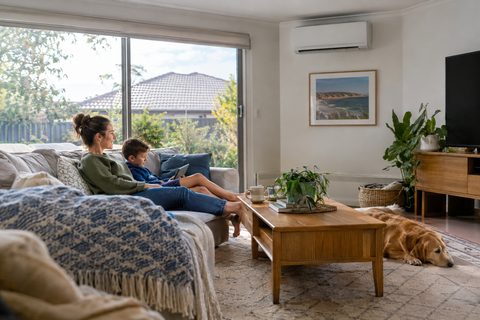
Usually, no. Most Australian lounge rooms or open-plan living areas are larger than 20 square metres and have significant heat loads from kitchens or large glass doors. A 2.5 kW unit would likely run constantly without reaching the set temperature, leading to high power bills and potential equipment failure.
Does a 2.5 kW air conditioner need a dedicated circuit?
Yes, under Australian electrical standards, most air conditioning installations require a dedicated circuit from the switchboard with its own circuit breaker and external isolator switch. This ensures the unit has a stable power supply and does not overload existing light or power circuits in the home.