What a 3.5 kW air conditioner can actually cool?
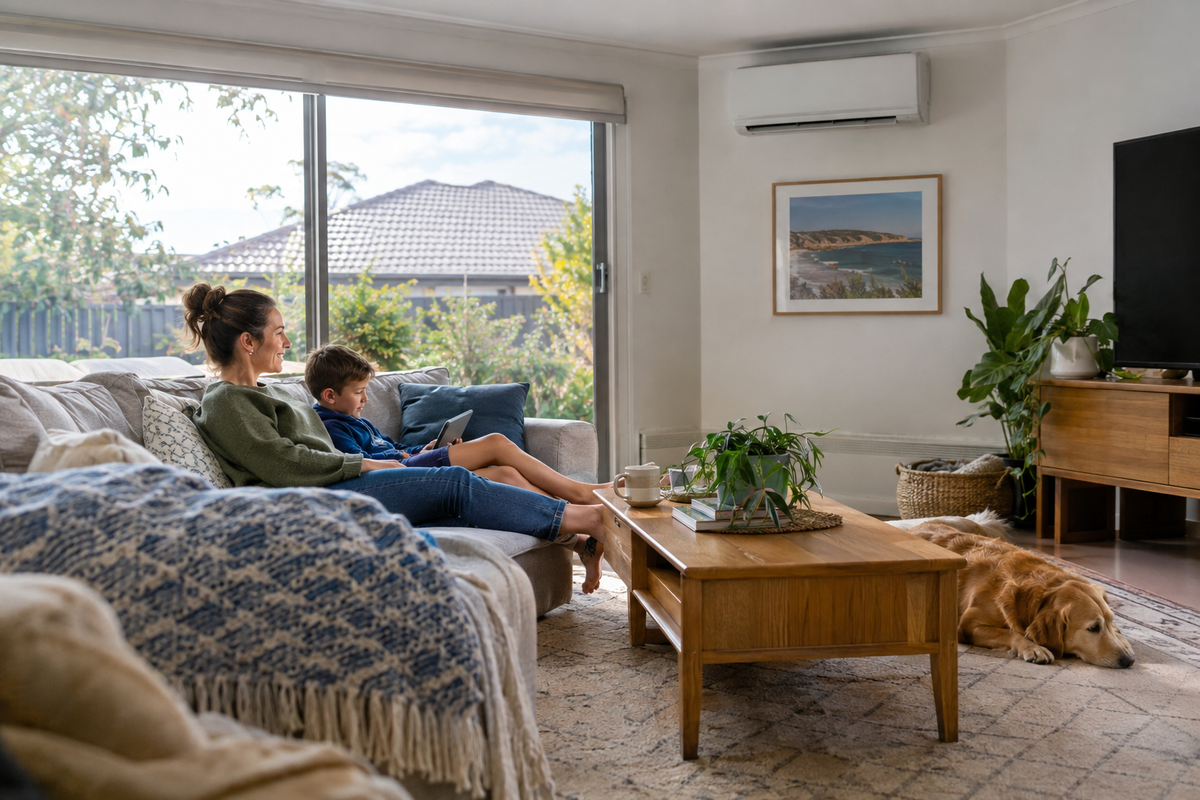
A 3.5 kW air conditioner is typically designed to cool a medium-sized room between 20 and 30 square metres, such as a master bedroom or a small lounge. The exact coverage depends on ceiling height, window orientation, and insulation levels. In a well-insulated modern home, it efficiently manages heat loads, whereas an older weatherboard house might require more capacity for the same area.
Matching room volume to 3.5 kW capacity
A 3.5 kW air conditioner is the standard choice for rooms that are too large for a small bedroom unit but not quite large enough to justify the jump to a 5.0 kW system. In technical terms, 3.5 kW refers to the cooling capacity, which is roughly equivalent to 12,000 BTU. This capacity is generally sufficient for spaces between 20 and 30 square metres, assuming a standard ceiling height of 2.4 metres. However, installers must look beyond floor area. If your home features 2.7-metre or 3-metre ceilings, the total volume of air the system must treat increases by up to 25 per cent. In these high-volume rooms, a 3.5 kW unit may struggle to reach the set point during a heatwave, leading to the compressor running at maximum speed for longer periods, which increases wear and electricity consumption.
When we assess a room, we also consider the specific use of the space. A master bedroom of 25 square metres is an ideal candidate for a 3.5 kW split system air conditioning unit because the heat load is lower at night. Conversely, a small home office of the same size with multiple computers, servers, and large windows might require the same capacity despite being a smaller physical footprint. The goal is to ensure the unit can achieve the desired temperature quickly and then ramp down its power usage using inverter technology. If the system is undersized for the volume, it never reaches that efficient 'cruising' state, which is why accurate measurement of the cubic volume is a priority over simple floor area calculations.
How building materials impact thermal load
The construction of an Australian home significantly dictates how hard a 3.5 kW air conditioner must work. A brick veneer home with modern R4.1 or R5.0 insulation in the ceiling will retain cool air far more effectively than an uninsulated weatherboard cottage. In older homes built in the 1970s, it is common to find dark tiled roofs that can reach temperatures of 70 degrees Celsius in the peak of summer. Without a sufficient thermal barrier, this heat radiates through the plasterboard and into the living space. In such environments, the 3.5 kW capacity is often the minimum requirement to combat the radiant heat entering from above, even in relatively small rooms.
Material density also plays a role. Double brick homes have high thermal mass; they take longer to heat up in the morning but can remain hot well into the evening as the bricks release stored energy. A lightweight cladding or weatherboard home reacts much faster to outside temperature changes. If you are installing a system in a coastal region where salt spray is a factor, the durability of the outdoor unit's heat exchanger is just as important as the kilowatt rating. We look for units with specialised coatings on the aluminium fins to prevent premature corrosion. In a dry inland zone, the focus shifts to the unit's ability to operate in extreme ambient temperatures, often exceeding 45 degrees Celsius, where the efficiency of the heat exchange process is tested to its limit.
Why window orientation dictates your capacity choice
Windows are the primary source of heat gain in any residential room. A single square metre of unshaded, north or west-facing glass can allow approximately 1 kW of heat into a room during the afternoon. If a 25-square-metre lounge has three square metres of west-facing glass, that window alone is consuming nearly all the cooling capacity of a 3.5 kW air conditioner. This is why orientation is a non-negotiable part of a site inspection. Without external shading, eaves, or high-performance glazing, a 3.5 kW unit that seems correct on paper may fail to keep the room comfortable during a summer afternoon.
To optimise the performance of this capacity, homeowners should consider internal window treatments like block-out curtains or, ideally, external solutions like awnings or shutters. In many modern Australian builds, the absence of wide eaves means that glass is exposed to direct sunlight for several hours a day. If your room features large sliding doors or floor-to-ceiling windows, we might recommend stepping up to a larger capacity or prioritising a unit with a high 'T1' cooling rating. This rating indicates how the system performs at 35 degrees Celsius, but we also check the 'T3' performance for those living in hotter climates where the unit must continue to function effectively when the mercury rises even further.
Electrical requirements and installation variables
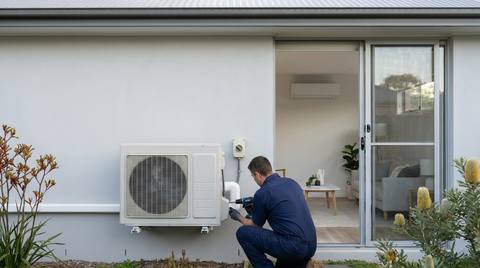
A 3.5 kW air conditioner is not a 'plug-and-play' appliance. Under AS/NZS 3000 electrical standards, these units generally require a dedicated circuit back to the main switchboard. While smaller 2.5 kW units can sometimes be added to existing power circuits depending on the total load, the 12,000 BTU capacity of a 3.5 kW system usually necessitates its own 15-amp or 20-amp circuit breaker. This ensures that when the compressor ramps up to its maximum frequency, it does not trip the circuit shared with other household appliances. This electrical work is a significant factor in the total installation price, which as of 2026 typically ranges from $1,900 to $2,700 for a standard back-to-back install.
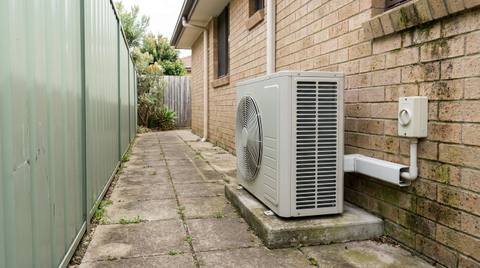
The physical placement of the outdoor condenser unit also affects performance. If the unit is installed in a narrow side passage with poor airflow, the hot air it exhausts can be recirculated back into the intake. This causes the system to overheat and reduces its cooling capacity. We ensure that the outdoor unit has at least 100mm of clearance at the rear and 500mm of clear space in front of the fan. For multi-storey homes, the length of the copper pipe run between the indoor and outdoor units can also impact efficiency. While 3.5 kW units can often handle pipe runs of up to 15 or 20 metres, any run longer than 7.5 metres usually requires additional refrigerant gas to be weighed in to maintain the factory-specified performance levels.
Performance differences in humid versus dry climates
The way a 3.5 kW air conditioner operates changes based on the local climate's humidity. In a humid coastal environment like Darwin, the system spends a large portion of its energy on 'latent' cooling—the process of removing moisture from the air. This is why you will see a constant stream of water from the drain pipe in tropical regions. Because the unit is working to dehumidify the space, the actual temperature drop may feel slower than it would in a dry climate. In contrast, an install in a city like Hobart faces the opposite challenge; the unit must be highly efficient at 'sensible' cooling and heating, as the air holds very little moisture.
In temperate zones like Sydney or Melbourne, the 3.5 kW unit is often used as a reverse-cycle system for both summer cooling and winter heating. During winter, the unit extracts heat from the outside air—even when it is cold—and pumps it indoors. However, when the outside temperature drops below 5 degrees Celsius, the outdoor unit may enter a 'defrost' cycle to melt ice build-up on the coils. This briefly pauses the heating process. If you live in a region prone to frost, we look for units with an optimised base pan heater to prevent ice from damaging the fan blade. For larger homes where multiple rooms need climate control, a 3.5 kW unit might serve as a single zone within a larger ducted air conditioning system, allowing for precise control of a specific area like a master suite.
Long-term maintenance and unit longevity
To ensure a 3.5 kW air conditioner lasts its expected lifespan of 10 to 15 years, regular maintenance is essential. The most common cause of capacity loss is a blocked return air filter. When the filter is coated in dust, the airflow across the indoor evaporator coil is restricted, which can lead to the coil freezing up or the compressor overheating. We recommend that homeowners clean their filters every fortnight during peak seasons. Beyond the filters, the indoor coil can develop mould and bacterial growth over time due to the dark, damp environment created during the dehumidification process. A professional air conditioning service once a year is necessary to chemically clean these coils and ensure the condensate drain is clear.
The outdoor unit is equally vulnerable, especially in Australian conditions. Spiders, geckos, and ants are frequently attracted to the electrical components of the outdoor inverter board, which can cause short circuits that are expensive to repair. We also check the condition of the insulation on the copper pipework; if the sun has perished the foam insulation, the system will lose significant cooling capacity before the refrigerant even reaches the indoor unit. For those looking to replace an old unit or view the latest high-efficiency models, browsing a product catalogue can provide insight into which modern units offer the best corrosion protection and smart-controller compatibility for your specific environment. Regular attention to these details prevents small issues from becoming major mechanical failures, ensuring the system remains efficient for its entire service life.
Common questions
What size room is a 3.5 kW air conditioner suitable for?
A 3.5 kW unit is generally suitable for rooms between 20 and 30 square metres. This includes medium-sized bedrooms, small living areas, or large home offices. Factors like high ceilings, large west-facing windows, and lack of insulation can reduce this effective range, requiring a larger unit for the same floor area.
How much does it cost to run a 3.5 kW air conditioner?
Running costs depend on the unit's energy star rating and your local electricity tariff. On average, a modern 3.5 kW inverter unit costs between $0.15 and $0.35 per hour to operate in 2026. Using the 'eco' mode and setting the temperature to 24 degrees Celsius helps minimise these costs during summer.
Does a 3.5 kW air conditioner need a dedicated power circuit?
Yes, in most Australian residential installations, a 3.5 kW unit requires its own dedicated circuit and a 15-amp or 20-amp breaker at the switchboard. This is a safety requirement under AS/NZS 3000 to prevent overloading existing power circuits when the compressor is operating at its maximum capacity.
Can a 3.5 kW unit heat as well as cool?
Most 3.5 kW systems sold in Australia are reverse-cycle, meaning they provide both heating and cooling. They are highly efficient heaters, often producing three to four times more heat energy than the electrical energy they consume. This makes them a cost-effective alternative to electric bar heaters or gas heating.
Is 3.5 kW the same as 12,000 BTU?
Yes, 3.5 kW is the metric equivalent of approximately 12,000 BTU (British Thermal Units). While some older systems or imported specifications still use BTU, the Australian industry standard is to measure cooling and heating capacity in kilowatts (kW) to provide a clear indication of the system's thermal output.