
Smart air conditioner controller options for Australian homes
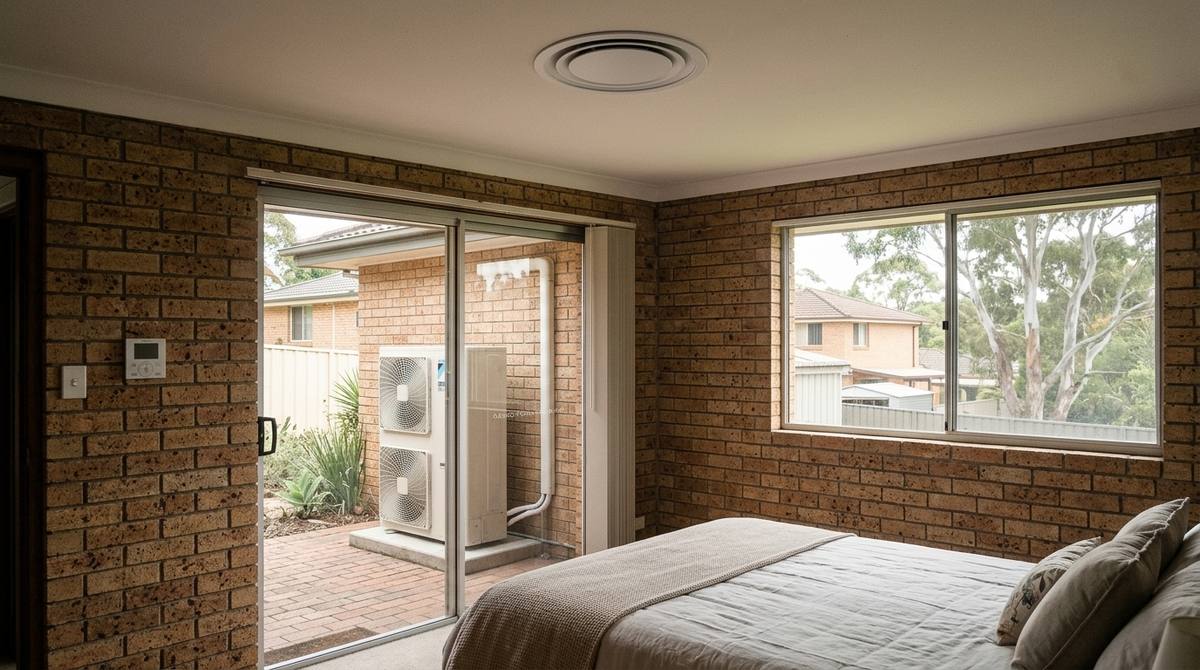
A smart air conditioner controller allows you to manage your home's climate via a smartphone app or voice command. These devices range from simple Wi-Fi retrofit kits for existing split systems to advanced integrated zone controllers for ducted units. By optimising run times and temperature settings based on occupancy or outdoor conditions, they can significantly reduce energy consumption in Australian climates.
How smart controllers bridge the gap for older units
Smart controllers for split systems often take the form of an infrared (IR) bridge. These devices are positioned within line-of-sight of the indoor head unit and mimic the signals sent by the standard handheld remote. This is a common solution for older homes, such as those built in the 1980s or 1990s, where the existing air conditioning unit lacks native Wi-Fi connectivity. The primary benefit of this approach is that it requires no internal wiring changes. The controller connects to the home's Wi-Fi network, allowing the user to send commands from a smartphone app, which the device then translates into IR signals for the AC.
Modern retrofit controllers have evolved beyond simple on-off switches. Many now include built-in temperature and humidity sensors, providing a secondary reading that is often more accurate than the sensor located inside the high-wall unit itself. This allows for 'Feel' or 'I-Sense' modes where the unit adjusts its output based on the temperature at the controller’s location, rather than at the ceiling where heat naturally pools. For homeowners with older but functional hardware, adding a smart bridge is the most cost-effective way to modernise their climate control without the expense of a full system replacement.
Scheduling is another critical advantage. Most standard remotes offer basic timers, but they are often difficult to program and limited to a single 24-hour cycle. A smart controller allows for complex weekly schedules, such as pre-cooling a west-facing bedroom at 4:00 PM during summer or ensuring the unit turns off automatically when the last person leaves the house. This level of automation helps to minimise waste in homes with dark tiled roofs that tend to absorb and hold heat long after the sun has set.
The technical difference between IR blasters and hardwired modules
A major distinction in the world of smart air conditioner controllers is whether the system provides state feedback. Basic IR controllers are one-way; they send a command to turn the unit on, but they do not actually know if the unit responded. If someone manually turns the unit off using the physical remote, the app might still show it as active. Hardwired smart modules, which connect directly to the indoor unit’s PCB (Printed Circuit Board), solve this problem. These modules communicate directly with the system's logic, providing real-time data on actual fan speed, compressor frequency, and even specific error codes if the unit fails.
For a homeowner investing in a high-efficiency split system air conditioning unit, the reliability of a hardwired connection is usually worth the additional installation cost. These modules are typically brand-specific, manufactured by the AC company to sit inside the chassis of the unit. Because they are powered by the unit itself, there are no batteries to change and no cables trailing down the wall. From an installer's perspective, these are far superior because they allow for remote diagnostics, meaning a technician can often see what is wrong with a system before they even arrive on site.
Connectivity protocols also vary. While most consumer-grade controllers use 2.4GHz Wi-Fi, professional-grade systems may use Zigbee or Z-Wave to integrate with broader home automation hubs. This is particularly useful in large masonry homes where Wi-Fi signal penetration is poor. By using a mesh network, the smart controller can maintain a stable connection even if the main router is located on a different floor. When we assess a site for a smart upgrade, we prioritise the signal stability of the chosen controller to ensure the user isn't left without control during a heatwave.
Integrating smart control into ducted reverse cycle systems
In larger Australian homes, particularly modern double-storey builds with complex ductwork, a smart controller often manages more than just the temperature. Advanced platforms like AirTouch or MyAir integrate with the entire ducted system to provide individual room zoning. This is critical in climates where a north-facing master bedroom might bake under the afternoon sun while a south-facing lounge remains cool. A smart zone controller uses motorised dampers to restrict or increase airflow to specific areas based on sensor data from each room.
This level of control prevents the outdoor compressor from overworking. In a traditional ducted setup, the system is either on or off for the whole house, or perhaps split into two large zones. A smart controller allows you to close off 70% of the house and focus the cooling only where it is needed. Modern systems can ramp the compressor capacity down to match the reduced load, which significantly lowers electricity bills. This is a far more efficient way to manage a ducted air conditioning installation than relying on a single wall-mounted thermostat in a hallway.
Furthermore, these integrated controllers can manage bypass dampers and air balance. If too many zones are closed, the air pressure in the ducts can build up, leading to noise or damage. A smart controller monitors this pressure and automatically bleeds excess air into a common zone or adjusts the fan speed to compensate. This technical oversight happens in the background, ensuring the longevity of the fan motor and the ductwork itself. For a home with a large Colorbond roof, where attic temperatures can spike rapidly, having a system that can intelligently shift cooling capacity is a necessity rather than a luxury.
Energy efficiency gains in extreme Australian climates
Geofencing is a feature that uses the GPS on your smartphone to trigger the air conditioner based on your proximity to the house. In a humid coastal climate, such as that found in Darwin, leaving the air conditioner off all day can lead to indoor moisture build-up and uncomfortable humidity. A smart controller can be set to activate the dry mode when you are five kilometres from home, ensuring the air is dehumidified before you arrive. This proactive management is more efficient than forcing the unit to run at maximum capacity for an hour to 'catch up' once you walk through the door.
Conversely, in a location like Canberra where winter temperatures drop significantly, geofencing can trigger the heating cycle to ensure the thermal mass of a brick veneer home is warmed up before the evening. This automation removes the need to leave the unit running at low power all day, which is a common but inefficient practice. Smart controllers also allow for 'Eco' modes that synchronise with weather forecasts. If the controller sees that the outdoor temperature is predicted to hit 40 degrees, it can pre-cool the home early in the morning when the outdoor unit is at its most efficient, rather than fighting the peak heat of the day.
Integration with solar PV systems is another area where smart controllers excel. Some high-end controllers can monitor your solar export and automatically turn on the air conditioning when you have excess power being generated. This essentially turns your home's thermal mass into a battery, storing the 'coolth' or heat for later use. This strategy is particularly effective for homes with large glass areas that would otherwise require expensive battery storage to manage their energy footprint. By shifting the load to match solar production, the running costs of a large reverse cycle system can be reduced to near zero during the daylight hours.
Installation requirements and connectivity hurdles
The physical construction of a home significantly impacts the performance of a smart air conditioner controller. Homes built with double brick or those featuring foil-backed insulation in the walls can act as a shield against wireless signals. If the smart controller is located in a central hallway but the router is at the other end of a long ranch-style house, the connection may drop frequently. We often find that installing a dedicated 2.4GHz network or using Wi-Fi mesh extenders is necessary to ensure the controller remains responsive at all times.
Power supply is another consideration for retrofit units. While some IR bridges are battery-powered, we generally recommend hardwired power via a USB wall brick. Batteries in these devices tend to fail at the worst possible time, usually during high-summer when the device is working hardest to send signals and maintain a cloud connection. For integrated ducted controllers, the wall-mounted touchscreens are typically powered via the low-voltage data cable that runs back to the indoor unit. This requires a professional installer to fish cables through the wall cavity, which can be challenging in two-storey homes without clear access between floors.
Firmware stability is the final technical hurdle. Because these devices rely on cloud servers to process app commands, they require a stable internet connection. If the manufacturer's server goes down, you may lose the ability to control your AC via your phone. High-quality controllers offer a local override or a physical wall panel that works even if the internet is disconnected. When choosing a system, we look for brands that have a proven track record of software updates and server uptime, as a 'smart' system that cannot be controlled is a significant frustration for any homeowner.
Cost drivers for smart controller upgrades
Pricing for smart air conditioner control varies based on the complexity of the integration and the number of indoor units involved. As of 2026, a basic plug-and-play IR controller typically costs between $120 and $280 per unit. These are often DIY-friendly and are a good starting point for a single bedroom or a small apartment. However, if you have four or five split systems throughout a house, the cost of individual bridges adds up, and managing them all through a single app can sometimes be clunky if the Wi-Fi network isn't robust.
For a hardwired Wi-Fi module specific to a brand like Daikin or Panasonic, you can expect to pay between $350 and $600 per unit, including professional installation and commissioning. These modules are more expensive because they require opening the indoor unit and interfacing with the electronics, but they offer far better reliability and data feedback. For homeowners who want to ensure their air conditioning service history and error logs are accessible, this is the professional choice. It eliminates the 'blind' control issues associated with IR blasters and ensures the unit operates exactly as the manufacturer intended.
Full-scale ducted zone control systems represent the top end of the market, with prices often ranging from $1,800 to $4,500. This cost includes the main touchscreen hub, motorised dampers for each room, individual temperature sensors, and the labour to install the wiring and duct modifications. While the initial outlay is higher, the potential for 20% to 30% energy savings through precise zoning often justifies the cost over the life of the system. When quoting these, we look at the number of zones required and the accessibility of the roof cavity, as a tight roof space can increase the labour time significantly.
Common questions
Can I add a smart controller to an old air conditioner?
Yes, most air conditioners with an infrared remote control can be retrofitted with a smart bridge. These devices mimic the remote's signal and connect to your Wi-Fi, allowing for smartphone control and scheduling without needing to replace the entire indoor unit.
Do smart air conditioner controllers save money on electricity?
Smart controllers can reduce energy bills by 20% to 30% through better scheduling, geofencing, and zoning. By ensuring the unit only runs when needed and optimising temperature settings based on outdoor conditions, they prevent the waste common with manual operation.
Is a Wi-Fi connection mandatory for a smart controller to work?
A Wi-Fi connection is required for remote access via a smartphone and for features like weather synchronisation. However, many professional-grade controllers also include a physical wall panel that allows you to control the system manually if your internet goes down.
Can I control multiple air conditioning units from one app?
Most smart controller ecosystems allow you to group multiple units within a single app. You can name them by room, such as 'Master Bedroom' or 'Lounge', and set independent schedules or sync them all to turn off with one command.
