Ceiling mounted ac unit options and installation considerations
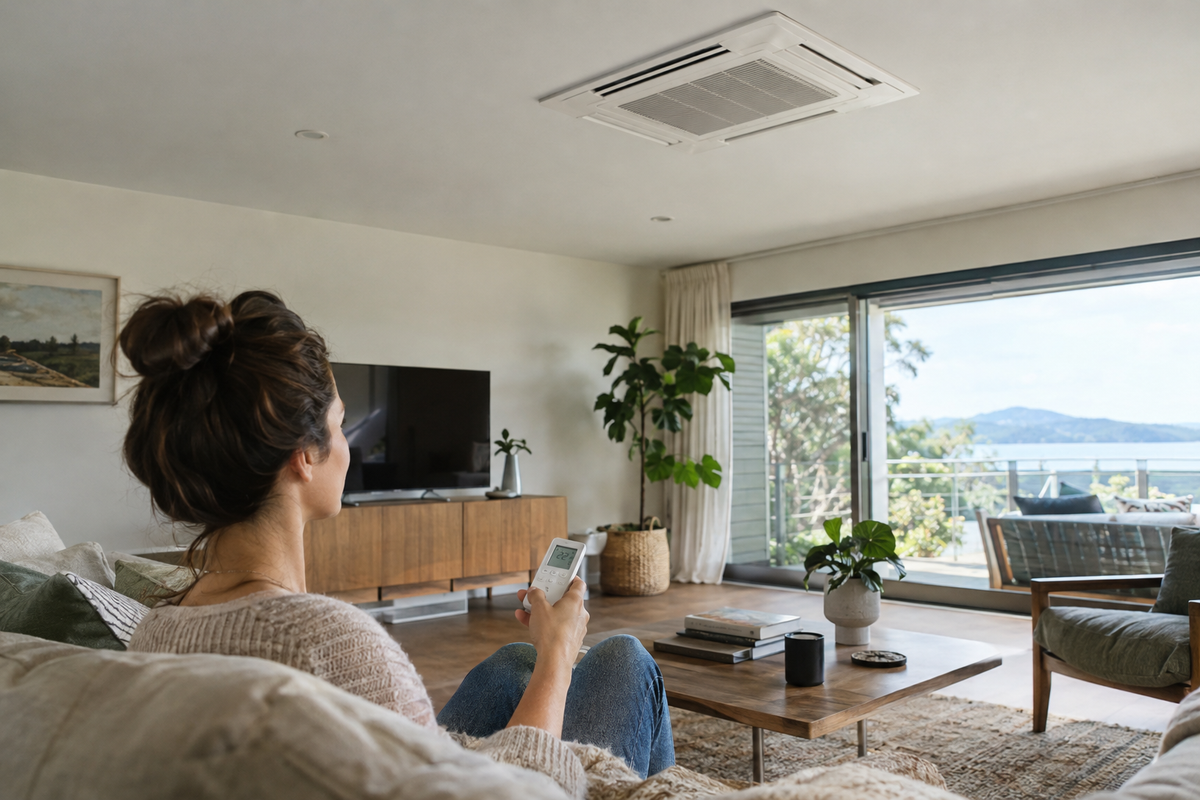
A ceiling mounted ac unit typically refers to either a ceiling cassette split system or a ducted air conditioning system. Cassettes are ideal for open-plan areas where wall space is limited, while ducted systems provide whole-home comfort. Choosing the right unit depends on your roof cavity space, ceiling height, and the specific cooling requirements of your home's layout.
Choosing a ceiling mounted ac unit is a common decision for homeowners who prefer a discrete aesthetic or have limited wall space for a traditional split system. In most residential contexts, this refers to a ceiling cassette. These units are installed flush with the ceiling, with only the fascia panel visible. Unlike a wall-mounted unit that blows air in one direction, a cassette usually provides four-way or 360-degree airflow, making them highly effective for large, open-plan living areas where central air distribution is required. We often see these installed in modern homes with large glass sliding doors and minimal internal wall surfaces.
Why choose a ceiling cassette over a wall unit?
The primary driver for selecting a ceiling cassette is the distribution of air. A standard split system air conditioning unit is mounted high on a wall and relies on horizontal throw to move air across a room. This can lead to hot spots in the corners of very wide rooms. A ceiling cassette sits in the centre of the space and pushes air downwards and outwards in four directions. This creates a more uniform temperature profile. This is particularly useful in a humid coastal climate where stagnant air can lead to discomfort even if the temperature is technically low.
From an installer's perspective, the cassette is a more complex job. A wall unit requires a single hole through the brickwork or weatherboard for the refrigerant lines and drainage. A ceiling cassette requires a large square structural opening to be cut into the plasterboard. We must also ensure the unit is supported by the roof timber rather than the ceiling itself. If you are building a new home or renovating, planning for these units early is essential to ensure the joists and trusses are spaced to accommodate the chassis, which is typically around 600mm to 900mm square.
Another advantage is the use of wall space. In homes with floor-to-ceiling windows or extensive artwork, there may simply be no room for a 1.1-metre-long plastic box on the wall. The ceiling cassette solves this by using the 'dead' space in the roof. However, this aesthetic benefit comes with a higher hardware cost and a more intensive installation process, which we will detail in the pricing section. It is a trade-off between visual minimalism and the upfront budget.
Assessing roof cavity requirements for installation
Before you commit to a ceiling mounted ac unit, we must verify that your roof cavity has the necessary depth. A standard cassette unit chassis is between 250mm and 350mm deep. Once you account for the clearance required for the refrigerant pipe bends and the condensate drain line, you generally need a minimum of 400mm of vertical space between the ceiling plaster and the roof deck or tiles. In many modern double-storey homes, the space between floors (the plenum) is not deep enough for a full-sized cassette, which may limit you to 'slim' models or wall-mounted alternatives.
The structural integrity of the roof is the next check. A 7kW cassette unit can weigh between 20kg and 35kg. We do not hang this weight from the plasterboard. Instead, we use threaded rod to suspend the unit from the rafters or trusses. If your home uses lightweight steel trusses or narrow-span timber, we may need to install additional 'trimmers' (support beams) to spread the load. This is a standard part of the installation but adds time to the labour component of the quote.
Insulation also plays a role. If you have high-performance R6.0 batts in your ceiling, we have to move them away from the unit to prevent overheating of the internal electronics and to allow for proper airflow around the chassis. In a hot dry inland zone, the temperature inside a dark-tiled roof cavity can exceed 65 degrees Celsius in mid-summer. The unit must be rated to operate in these ambient temperatures, and the refrigerant pipes must be heavily insulated to prevent the cold gas from warming up before it reaches the indoor coil.
Sizing and capacity for open-plan living
Sizing a ceiling mounted unit follows different rules than a small bedroom split. Because cassettes are almost always used in large, high-traffic areas, the heat load is generally higher. We look at the total volume of air, not just the floor area. A room with 3-metre ceilings has 25% more air to cool than one with standard 2.4-metre ceilings. If your home has a large amount of west-facing glass without eaves, the radiant heat gain in the afternoon can be immense. We typically recommend a unit with a capacity of 7kW to 10kW for a standard 40 to 60 square metre living area.
If the capacity required exceeds 12kW, we must look at the electrical supply. Most older Australian homes have single-phase power, which usually caps out at around 14kW of cooling capacity before the current draw becomes too high for a standard 63A or 80A main fuse. If you are installing multiple ceiling units or a very large single unit, you may require a three-phase power upgrade. This is a significant expense that involves your local energy distributor and a level 2 electrician. We check the switchboard during our initial site visit to avoid any surprises during the install.
In a tropical climate like Darwin, the latent heat (humidity) is the primary concern. A ceiling cassette is excellent here because it can move large volumes of air through the dehumidification cycle. In contrast, in a dry climate like Canberra, the unit's heating performance in winter is just as important. Most modern ceiling mounted units are reverse cycle, meaning they provide efficient heat pump heating. However, heat rises, so a ceiling unit must have powerful louvres that can direct the warm air straight down to the floor to prevent it from pooling at the ceiling level.
Comparing ducted systems and multi-head cassettes
Sometimes a single ceiling mounted unit isn't enough, and homeowners consider a ducted air conditioning system instead. A ducted system is the ultimate ceiling-mounted solution because everything except the small vents is hidden in the roof. However, ducted systems require a much larger roof cavity to house the indoor fan coil unit and the bulky flexible ducting. If you have a flat roof or a raked ceiling with no cavity, a ducted system is physically impossible to install, whereas a 'slim' cassette or an under-ceiling unit might still fit.
A multi-head split system is another alternative. This allows you to connect multiple indoor units—including a mix of wall-mounted and ceiling cassettes—to a single outdoor condenser. This is a great way to save space in the garden or on a balcony. Each room can be controlled independently, which is more efficient than a ducted system if you only need to cool one or two rooms at a time. For example, you might have a 7kW cassette in the main lounge and 2.5kW wall units in the bedrooms.
The choice between these often comes down to the 'run'—the distance between the indoor and outdoor components. Ceiling units have a built-in condensate pump that can lift water up and away to a drain point, which gives us more flexibility in where we place the unit compared to a wall split that relies on gravity drainage. If the indoor unit is in the centre of a large house, we might need to run 15 or 20 metres of copper pipe. Every metre of pipe adds to the cost and slightly reduces the efficiency of the system, so we aim for the shortest practical route.
Installation costs and technical variables
As of late 2026, the cost to install a single ceiling cassette in a residential home typically ranges from $3,800 to $6,500. This range is wider than wall-mounted splits because of the variables involved. A 7kW unit from a reputable brand like Daikin or Mitsubishi Electric will cost approximately $2,400 to $3,200 for the hardware alone. The remaining amount covers the electrical circuit, the refrigerant pipework, the structural timber work, and the labour for a two-person team. If the home has a difficult roof pitch or restricted access, labour costs will sit at the higher end of the scale.
Electrical requirements are a major driver of the final price. A ceiling mounted unit of 7kW or larger requires a dedicated 20A or 32A circuit from the main switchboard. If your switchboard is full or contains old ceramic fuses, we must upgrade it to meet current AS/NZS 3000 safety standards, including the installation of RCDs (residual current devices). This can add $500 to $1,500 to the total job cost. We always recommend checking the product catalogue for the specific electrical specifications of the unit you are considering.
Another factor is the condensate management. Because the unit is in the ceiling, the water removed from the air must be pumped out. Most cassettes have an internal pump that can lift water about 700mm to 1000mm. If the drain run is long or has to go over a structural beam, we may need to install an auxiliary pump. These pumps are small but can be audible in a quiet room, so we discuss the placement with you to ensure it doesn't disturb your sleep or television viewing. High-quality pumps are essential here, as a failure can lead to water damage on your ceiling plaster.
Maintenance and long-term performance
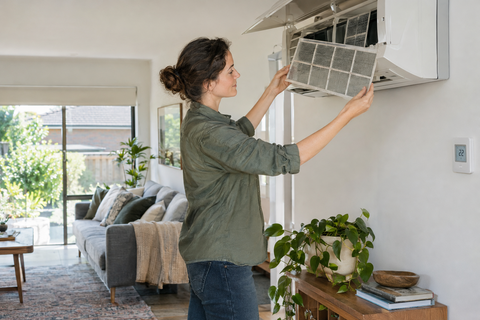
Maintaining a ceiling mounted ac unit is slightly different from a wall unit. The filters are located behind the intake grille on the fascia. In most models, this grille can be unlatched and lowered, allowing the filters to be slid out. In a home with pets or high dust levels, these should be cleaned every three months to maintain airflow and efficiency. If the filters are blocked, the unit has to work harder, which increases your power bills and puts unnecessary strain on the compressor. You can find more details on professional upkeep in our air conditioning service guide.
Every two to three years, a deeper clean is necessary. This involves clearing the condensate tray. Because the tray sits flat in the ceiling, it can collect a biofilm or 'sludge' over time, which may eventually block the pump or the drain line. A professional technician will treat the tray with anti-bacterial tablets and flush the lines to prevent leaks. We also check the refrigerant charge. A slow leak in a ceiling unit can be harder to spot than in a wall unit, as the pipework is hidden in the roof, so pressure testing during a service is vital.
For homes in coastal areas, salt corrosion is the biggest threat to longevity. The outdoor unit (the condenser) is exposed to the elements 24/7. We look for units with 'Blue Fin' or 'Gold Fin' coatings on the aluminium heat exchanger coils. These coatings provide a protective layer against salt spray and moisture, which can otherwise eat through the metal and cause a gas leak within five years. In a harsh environment like coastal Queensland or the windy shores of Tasmania, this protection is not optional; it is the difference between a system that lasts fifteen years and one that fails in six.
Common questions
What is the difference between a ceiling cassette and ducted AC?
A ceiling cassette is a self-contained unit where the fan and coil sit in the ceiling of a single room, visible via a fascia panel. Ducted air conditioning uses a large hidden central unit to distribute air to multiple rooms through flexible tubes and small vents.
How much ceiling space is required for a cassette unit?
Most residential ceiling cassettes require between 300mm and 400mm of vertical clearance in the roof cavity. This space accommodates the unit's chassis, the refrigerant pipe connections, and the mandatory slope or lift for the condensate drain line to prevent water leaks.
Are ceiling mounted units more expensive to install?
Yes, ceiling mounted units generally cost more to install than wall-mounted splits. This is due to the higher hardware price, the need for structural support in the roof, the complexity of cutting into the ceiling, and the inclusion of a condensate pump system.
Can you install a ceiling cassette in a multi-storey home?
Installation in a multi-storey home is possible if there is a sufficient plenum space between the floors, typically at least 300mm. If the space is too shallow, we may recommend a slim-line ducted system or a bulkhead unit that can be built into a decorative box.
How often should ceiling mounted filters be cleaned?
Filters in a ceiling mounted unit should be checked and cleaned every three to six months. Because these units often serve large open-plan living areas, they process a high volume of air and can accumulate dust and pet hair faster than units in smaller, closed rooms.