How much does air conditioning repair cost in Australia?
Air conditioning repair prices in Australia typically range from $180 for an initial diagnostic call-out to over $3,000 for complex compressor replacements. Minor electrical repairs like capacitor swaps usually fall between $300 and $600, while refrigerant leak repairs often cost $500 to $1,500 depending on the gas type. Total costs are driven by part availability, system age, and site access challenges.
What to expect from initial diagnostic call-out fees
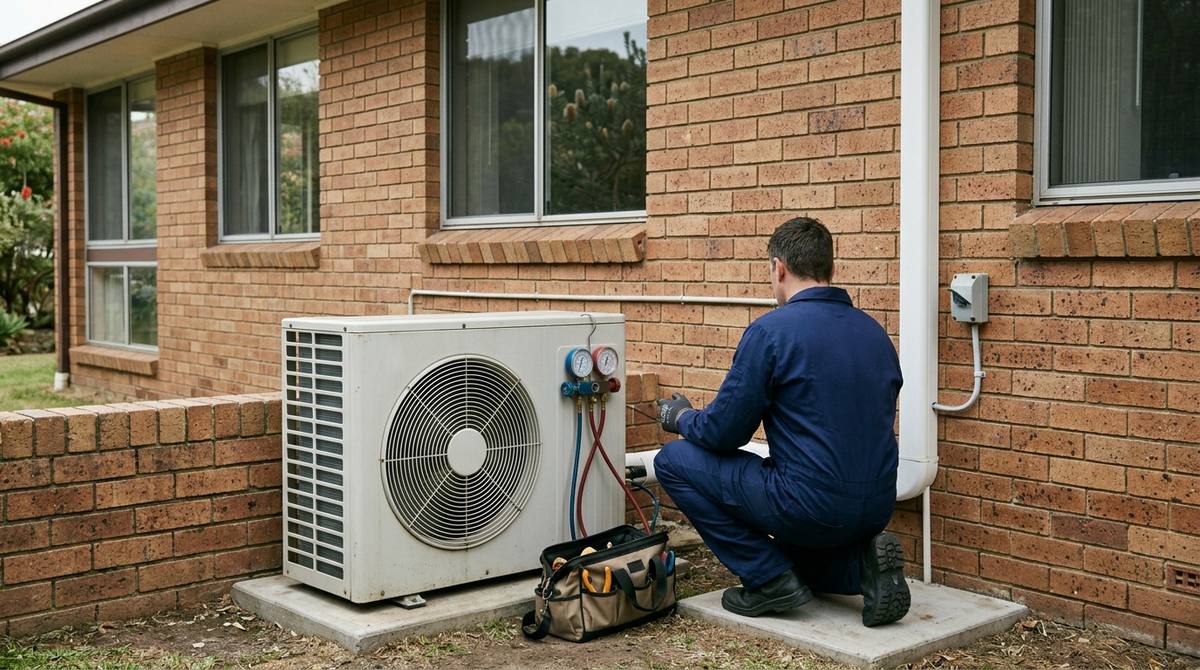
When an air conditioner fails, the first expense a homeowner encounters is the diagnostic call-out fee. In the Australian market, this fee typically ranges from $180 to $280, depending on the service provider and the distance they must travel. This is not merely a travel charge; it covers the overheads of a licensed technician, their vehicle, insurance, and the specialised tools required to identify a fault. A technician arrives with manifold gauges for pressure testing, digital multimeters for electrical testing, and often thermal imaging cameras to locate blockages or overheating components. We find that a thorough diagnostic process takes between thirty and sixty minutes, during which the technician will check the indoor and outdoor units, the electrical supply, and the thermostat communication.
It is common for the call-out fee to include the first thirty minutes of labour. If the issue is a simple fix, such as a loose terminal or a blocked drain line, the initial fee may cover the entire job. However, for more complex issues, this fee only covers the identification of the problem. Following the diagnosis, the technician should provide a fixed quote for the necessary parts and additional labour. It is worth noting that technicians must hold an ARC (Australian Refrigeration Council) licence to handle refrigerants, and their hourly rates reflect this level of professional certification. In metropolitan areas, hourly rates after the first hour usually sit between $120 and $160. Understanding these base costs helps homeowners avoid the shock of a final bill that includes both the diagnostic fee and the subsequent repair work.
Common electrical component repair and replacement costs
Electrical failures are the most frequent reason for system breakdowns, particularly after the first few days of a summer heatwave. The most common component to fail is the capacitor, which helps start the compressor and fan motors. A capacitor replacement typically costs between $300 and $550, including the part and labour. These components are essentially batteries that hold a charge, and they are highly sensitive to the extreme heat found in a dark tiled roof in a hot dry inland zone. When a capacitor fails, the motor it serves will hum but fail to start, which can lead to further damage if the system is not turned off immediately.
More expensive is the Printed Circuit Board (PCB), often referred to as the inverter board. Modern split system air conditioning units rely on these complex electronics to vary the speed of the compressor and maximise energy efficiency. Because these boards are proprietary to each manufacturer, they can be costly to replace. A new outdoor inverter board usually costs between $800 and $1,800. The price depends on the capacity of the unit and the brand. In humid coastal climates, these boards are prone to failure due to moisture ingress or even small pests like geckos entering the outdoor casing and short-circuiting the electronics. Replacing a board is a precision task that requires the technician to ensure all sensors and thermal paste are correctly applied to prevent the new component from overheating.
Mechanical failures in fan motors and compressors
Mechanical components are the workhorses of the system and their failure usually results in a complete loss of cooling or heating. An outdoor fan motor, which is responsible for exhausting heat from the refrigerant, typically costs between $650 and $1,100 to replace. The price varies based on whether the motor is a standard AC model or a more sophisticated DC inverter motor. If the indoor blower motor fails, the costs are similar, though the labour can be higher if the unit is located in a restricted space. We see these failures most often in systems that have not received a routine air conditioning service, as dust buildup puts extra strain on the motor bearings over time.
The most significant mechanical repair is a compressor replacement. The compressor is the heart of the air conditioner, and its failure is often the most expensive scenario a homeowner can face. For a standard residential system, a compressor replacement will cost between $2,000 and $4,000. This is a highly technical process that involves reclaiming the existing refrigerant, cutting and brazing copper pipes, replacing the filter drier, and performing a deep vacuum of the system to remove all moisture. Because of the high cost of the part and the extensive labour required, many technicians will recommend a full system replacement if the unit is more than eight years old. A compressor burnout can also contaminate the entire pipework with acid, requiring an expensive flushing procedure to ensure the new compressor does not fail prematurely.
Finding and fixing refrigerant leaks in residential systems
Refrigerant leaks are a common issue that cannot be solved by simply adding more gas. Australian environmental regulations prohibit the 'topping up' of a leaking system without first identifying and repairing the source of the leak. The process begins with a leak search, which can cost between $300 and $600. Technicians use electronic leak detectors or a nitrogen pressure test to find the pinhole in the copper coils or joinery. If the leak is located on a flare nut or a join, the repair is relatively straightforward. However, if the leak is within the evaporator or condenser coil, the entire coil may need to be replaced, which can cost upwards of $1,500.
Once the leak is repaired, the system must be recharged with refrigerant. The cost of this depends on the type and quantity of gas required. R32 is the current standard and is moderately priced, while R410A is becoming more expensive as it is phased down. For older systems using R22, the cost of a regas can be astronomical, often exceeding $200 per kilogram, because the gas is no longer imported or manufactured. A full regas for a large ducted system might require 5 to 8 kilograms of refrigerant, leading to a total bill of $800 to $1,500 just for the gas and labour. This is why a professional diagnosis is essential; a simple leak can quickly become a major financial burden if the refrigerant type is obsolete.
How site access and construction affect labour prices
The physical layout of a home is a major driver of professional air conditioning repairs costs. A technician can work much faster on a ground-mounted unit with clear access than on one located on a steep Colorbond roof or a multi-storey apartment balcony. In older homes built in the 1970s, the roof cavities are often narrow and filled with thick insulation, which makes accessing ducted air conditioning systems difficult and time-consuming. If a technician has to spend an hour just crawling to the indoor unit, that time is billed to the homeowner. We also have to account for safety requirements; working at heights often necessitates a second technician for safety or the use of specialised harness equipment.
Construction materials also play a role. For example, a unit mounted on a weatherboard wall may require additional vibration dampening during a motor repair to prevent noise transfer into the home. In coastal areas, salt-induced corrosion can make it nearly impossible to remove panels or bolts without cutting them, which adds significant labour time to even simple part replacements. Furthermore, the electrical infrastructure of the home can impact costs. If a repair identifies that the existing circuit breaker or wiring is undersized for the unit's draw—a common find in older renovations—an electrician may be required to upgrade the switchboard to comply with AS/NZS 3000 standards. These hidden variables are why a site visit is the only way to get an accurate repair quote.
Determining if a repair is financially viable
Every homeowner eventually faces the choice between repairing an old unit or investing in a new one. The general rule of thumb is the '50% rule': if the repair cost exceeds half the price of a new system, replacement is usually the wiser investment. This is particularly true for systems over ten years old. Modern air conditioners are significantly more efficient than those manufactured a decade ago. For instance, a Darwin install fights humidity where a Hobart one fights winter, and in both climates, a modern inverter system can reduce energy consumption by 30% to 40% compared to an older fixed-speed model. The long-term savings on electricity bills often offset the higher initial cost of a new installation.
Another factor is the warranty. A repair typically only comes with a twelve-month warranty on the specific part replaced, whereas a new system provides a five-year manufacturer warranty on the entire unit. If a system has already had multiple small repairs, it is often a sign that the components are reaching the end of their service life. We suggest looking at the overall condition of the unit; if the outdoor coils are shedding fins due to corrosion or the plastic casing is becoming brittle from UV exposure, a major mechanical repair is likely only a temporary fix. You can often find ducted air conditioning installation options that provide better value than a $3,000 compressor repair on an aging, inefficient unit. Reviewing our service standards can help you understand how we help homeowners weigh these technical trade-offs during a diagnostic visit.
Common questions
What is the average cost of a call-out fee for aircon repair?
In Australia, the average call-out fee ranges from $180 to $280. This fee typically covers the technician's travel and the first 30 to 60 minutes of diagnostic labour to identify the fault.
How much does it cost to regas an air conditioner?
The cost to regas a system usually falls between $500 and $1,500. This includes a leak test, which is legally required before adding gas, the repair of the leak, and the refrigerant itself.
Is it cheaper to repair or replace an old air conditioner?
If the repair exceeds 50% of the replacement cost or the unit is over 10 years old, replacement is usually better. New units are more energy-efficient and come with a full five-year warranty.
Why are inverter circuit boards so expensive to fix?
Inverter boards are proprietary electronics that control the compressor's speed. Because they are specific to each brand and model, they can cost between $800 and $1,800 to replace, including specialised labour.
For more detail, read our air conditioning repairs guide.