Understanding air conditioning installation price drivers
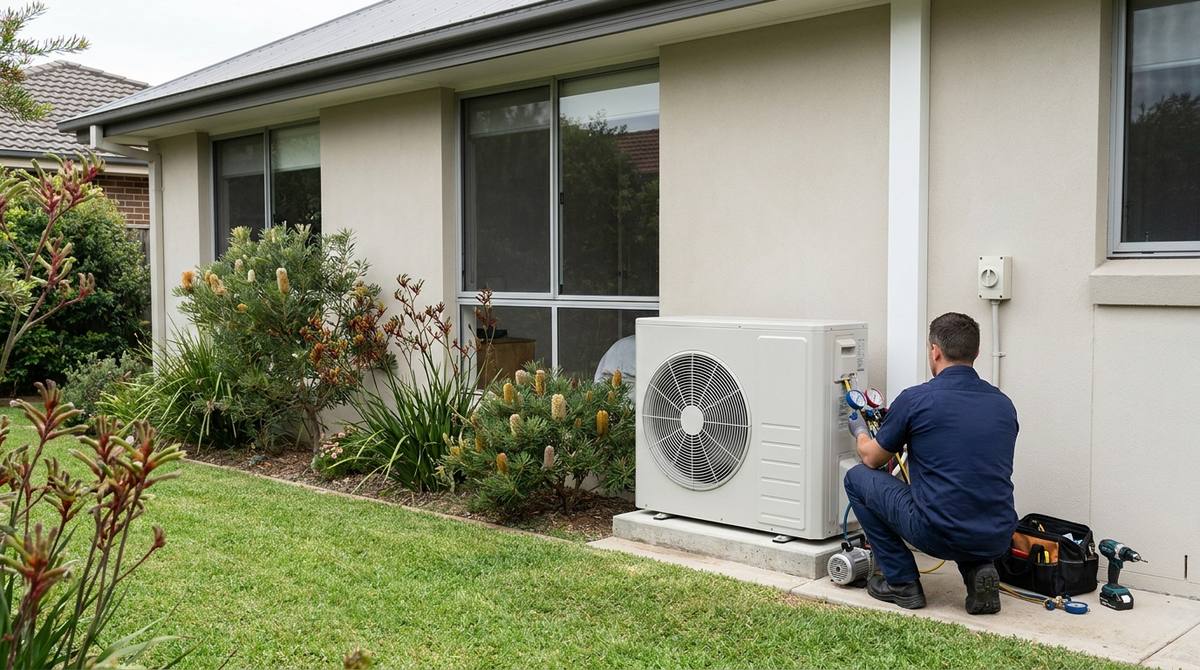
Air conditioning installation price varies by system type, with split systems typically costing between $600 and $3,500, while ducted systems range from $8,000 to over $25,000. These figures include hardware and standard labour. Total costs are driven by unit capacity, electrical switchboard requirements, roof cavity access, and the complexity of the ductwork or pipe runs required for your specific home layout.
Estimating an air conditioning installation price requires more than just looking at the sticker on a box. In the Australian market, the total investment is split between the hardware itself and the labour, materials, and compliance costs required to integrate that hardware into a specific building structure. For a standard split system, hardware might start at $700 for a 2.5 kW unit suitable for a small bedroom, while the installation labour for a 'back-to-back' configuration typically adds $600 to $900. However, if the indoor and outdoor units are separated by more than a few metres, or if the unit needs to be mounted on a second-storey wall, the price quickly scales. A larger 7.1 kW or 8 kW split system for a main living area often costs between $2,200 and $3,800 fully installed, depending on the brand and the length of the refrigeration pipe run.
Ducted systems represent a significantly higher tier of investment, generally starting at $8,000 for a small three-bedroom home and reaching $25,000 or more for large, multi-storey residences with complex zoning requirements. As of early 2026, a standard 12.5 kW ducted system for a four-bedroom single-storey home usually ranges between $11,000 and $14,500. This price includes the outdoor condenser, the indoor fan coil unit, ductwork, diffusers, and a basic controller. The primary drivers of price movement here are the capacity of the unit and the number of zones. A zone is a section of the house that can be turned on or off independently. While a standard four-zone system is common, upgrading to individual room temperature control adds specialised dampers and sensors, which can increase the quote by $2,000 to $4,000.
How hardware capacity and brand selection dictate cost
The capacity of the unit, measured in kilowatts (kW), is the first major factor in the quote. Sizing is not a simple calculation of floor area; it must account for ceiling height, glass area, and insulation quality. A 14 kW unit might be sufficient for a well-insulated home with eaves and high-quality glazing, but an identical floor plan with west-facing floor-to-ceiling glass and a dark tiled roof might require a 16 kW or 18 kW unit to maintain comfort during a 40-degree summer day. Choosing an undersized unit to save on the initial price is a common error; the system will run at maximum frequency constantly, leading to higher electricity bills and a shorter mechanical lifespan. Conversely, an oversized unit will 'short cycle,' turning on and off too frequently, which prevents effective dehumidification.
Brand tiers also create price variance. Premium brands like Daikin or Mitsubishi Electric often carry a price premium of 15% to 25% over entry-level brands. This extra cost generally covers better part availability, quieter outdoor fans, and more sophisticated inverter technology that can ramp down to very low power levels once the target temperature is reached. When we evaluate a site, we look at the specific application—a budget unit might be perfectly acceptable for a guest bedroom that sees occasional use, but for a main living area in a humid coastal climate, the reliability and efficiency of a premium brand are usually worth the higher initial air conditioning installation price.
Electrical infrastructure and switchboard compliance requirements
A factor often overlooked in initial estimates is the state of the home's electrical system. Modern air conditioners, particularly ducted units above 10 kW, require a significant amount of power. A 14 kW ducted system usually requires a dedicated 20 Amp or 32 Amp circuit. If you are living in a home built in the 1970s or earlier, your switchboard may still use old ceramic fuses rather than modern circuit breakers and RCDs (Residual Current Devices). Under the Australian wiring rules (AS/NZS 3000), an installer cannot simply add a new high-load circuit to an unsafe or non-compliant board. Upgrading a switchboard to meet current safety standards can add between $800 and $2,500 to the total project cost.
Furthermore, the difference between single-phase and three-phase power is a major price fork. Most standard suburban homes have single-phase power, which typically limits the size of the air conditioner to about 16 kW. If the home is very large and requires a 20 kW or 25 kW system, a three-phase power supply is often necessary. If the street connection is only single-phase, the cost to have the local network provider upgrade the service to the house can be several thousand dollars. We always check the switchboard first because it determines the maximum capacity the home can support without significant infrastructure spending. This is a critical step before choosing between a large ducted unit or multiple split system air conditioning units.
Structural challenges and building material impacts
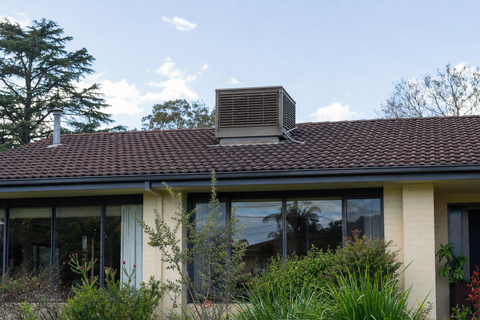
The physical construction of the home dictates the labour hours required. A single-storey home with a generous roof cavity and a 30-degree pitch is the ideal scenario for a ducted air conditioning install, as there is plenty of room for technicians to crawl and move large-diameter flexible ducts. In contrast, a home with a flat roof, a raked ceiling, or a very low-pitch roof may require the roofing sheets to be lifted to gain access, or the use of expensive rigid ducting that fits in tight bulkheads. These structural hurdles can add $1,500 to $3,000 in labour and specialised materials.
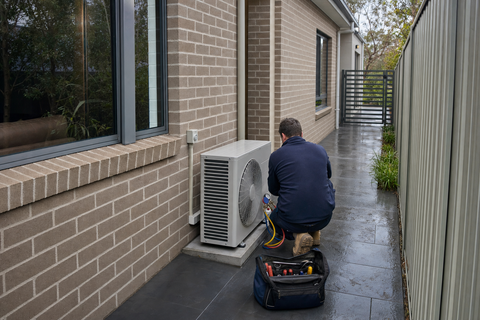
Building materials also play a role. Installing a split system on a weatherboard or brick veneer wall is relatively straightforward because the wall cavity allows for the concealment of refrigeration pipes and electrical cables. However, double brick construction or off-form concrete walls often require 'chasing' (cutting a channel into the wall) or the use of external PVC trunking to hide the pipes. Chasing and subsequent plastering/painting can add $500 to $1,000 per unit. For multi-storey homes, if there is no internal 'stack' or cupboard space to run pipes from the roof to the ground floor, we may need to use a crane to lift the outdoor unit onto the roof or a bracket system, which adds to the air conditioning installation price.
Air distribution and the cost of zoning logic
In a ducted system, the way air is moved through the house is as important as the unit itself. The quality of the ductwork matters; cheaper, thin-walled ducting has lower thermal resistance (R-value), meaning you lose cooling or heating energy into the roof space before it ever reaches the room. We recommend high-quality insulation, such as R1.5 rated ducting, which is thicker and more efficient than the standard R1.0 found in many budget quotes. While this might add $400 to $800 to the total, the long-term energy savings and improved airflow performance usually justify the cost.
The type of diffusers—the vents in the ceiling—also affects the price. Standard round plastic diffusers are the most cost-effective. However, many modern homes now utilise linear slot diffusers for a more integrated architectural look. These require more complex framing and installation labour, often adding $200 to $500 per room. Beyond the aesthetics, the zoning system is the 'brain' of the installation. A basic system might have two zones (day and night), while a high-end system like MyAir or AirTouch allows for individual room control via a smartphone app. These smart systems provide better comfort and lower running costs by only cooling occupied rooms, but they increase the initial installation price significantly due to the additional motorised dampers and control hardware.
Environmental factors and system longevity
Where you live in Australia changes what components are required for a long-lasting installation. For example, an install in Melbourne might focus on heating efficiency for the winter months, whereas a Brisbane home requires high dehumidification capacity and robust drainage to handle tropical downpours. In a humid coastal climate, salt air corrosion is a major threat to the aluminium fins on the outdoor condenser. In these zones, we specify units with specialised coatings (often called 'blue fin' or 'gold fin' protection) and use 316-grade stainless steel mounting brackets instead of standard powder-coated steel. These coastal upgrades might add $300 to $600 but can double the life of the outdoor unit.
In dry inland zones like Adelaide, peak summer temperatures frequently exceed 40 degrees, which can cause 'high-pressure trips' in poorly ventilated outdoor units. This requires careful placement of the condenser to ensure maximum airflow and often necessitates oversizing the unit slightly so it doesn't have to work at 100% capacity during the hottest part of the day. Additionally, the R-value of the ductwork becomes even more critical when roof cavity temperatures reach 60 degrees. Investing in better insulation and high-quality refrigeration pipe lagging prevents the 'sweating' and energy loss that occurs in extreme heat, ensuring the system actually delivers the kW capacity you paid for into the living spaces.
What a professional quote should always include
When comparing air conditioning installation prices, it is vital to ensure you are comparing like for like. A professional quote should be the result of an on-site inspection, not just a floor plan review. It must include the decommissioning and disposal of any old equipment, which involves the safe recovery of refrigerant gases as required by Australian law. It should also specify the brand and model of the unit, the R-value of the ducting, the number of zones, and the type of diffusers. Crucially, the quote should clearly state whether electrical work and switchboard upgrades are included or if they are to be handled by a separate contractor.
Finally, every installation must be followed by the provision of a Certificate of Electrical Safety and a Refrigerant Compliance Certificate. These documents are your proof that the work meets Australian standards and that your manufacturer's warranty is valid. A cheaper quote that bypasses these compliance steps puts your home insurance at risk and may lead to a voided warranty if the unit fails. To keep your system running at the efficiency levels promised at the time of installation, we recommend a regular air conditioning service to check refrigerant pressures, clean coils, and ensure the condensate drains are clear of debris. By understanding these drivers, you can move past the base price and invest in a system that genuinely suits your home's construction and your local climate.
Common questions
Why is there such a large range in ducted air conditioning prices?
The price range for ducted systems is wide because it covers everything from a small 7 kW unit for a cottage to a 25 kW system for a mansion. Drivers include the number of zones, the quality of duct insulation, and whether the home requires a three-phase power upgrade or crane hire for unit placement.
Does a dark tiled roof increase the installation price?
While it doesn't always increase the labour price, a dark tiled roof significantly increases the heat load of the home. This often necessitates a larger capacity unit (e.g., moving from 14 kW to 16 kW) and higher-rated duct insulation to counteract the extreme temperatures in the roof cavity during summer.
What is the price difference between a split system and ducted air conditioning?
A single split system is much cheaper, ranging from $1,300 to $3,800 installed. However, if you need to cool four or more rooms, the cost of multiple split systems approaches the $8,000 to $12,000 starting price of a ducted system, which provides a more seamless and integrated look.
Are there hidden costs in air conditioning installation?
Common hidden costs include switchboard upgrades ($800+), lifting roofing sheets for access ($1,000+), and wall chasing for double brick homes ($500+). A professional quote should identify these structural and electrical requirements after an on-site inspection to ensure there are no surprises during the actual installation process.
How does coastal living affect the installation price?
In coastal areas, the installation price may be slightly higher due to the need for corrosion protection. This includes specialised 'gold fin' or 'blue fin' coatings on the condenser coils and the use of stainless steel brackets and fixings to prevent rust caused by salt spray, extending the unit's life.