Reverse cycle air conditioner installation cost
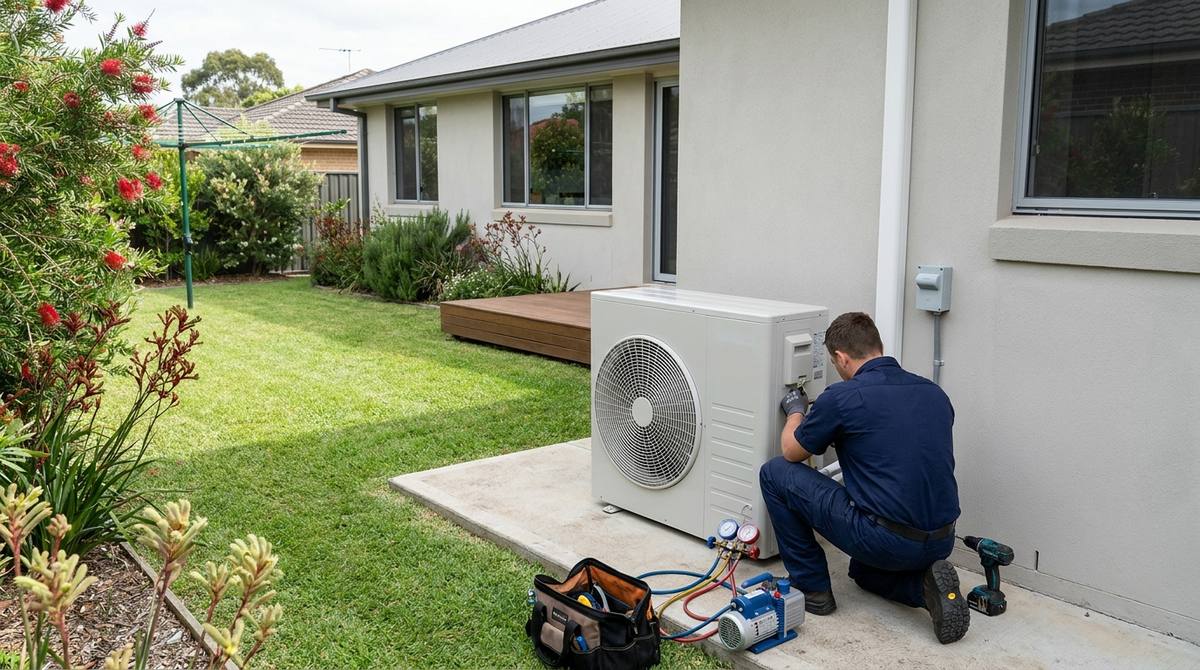
Reverse cycle air conditioner installation costs typically range from $2,500 for a single split system to over $15,000 for a whole-home ducted solution. Key price drivers include the system kilowatt capacity, the complexity of the electrical work, and the physical constraints of your home roof cavity or wall space. Prices vary based on brand selection and specific zoning requirements.
What determines the base price of reverse cycle air conditioning
When pricing a reverse cycle air conditioning project, we first look at the fundamental difference between a single-room split system and a whole-home ducted solution. A single split system air conditioning unit for a standard bedroom generally ranges from $2,500 to $4,500 including installation. This price covers a back-to-back installation where the indoor head unit sits directly opposite the outdoor compressor on an external wall. If the unit needs to be mounted on an internal wall, requires a condensation pump, or needs long pipe runs, the price increases by $500 to $1,200 due to the additional labour and materials involved.
For homeowners seeking a comprehensive climate solution, ducted air conditioning installation starts at approximately $8,500 for a small three-bedroom home and can exceed $25,000 for large, multi-storey residences. The hardware itself accounts for roughly half of this cost, while the remainder is distributed across ducting, zones, electrical work, and the labour required to navigate the roof cavity. Unlike a split system, which is a relatively simple electrical and refrigeration task, a ducted install is a major construction project that involves structural considerations and complex air distribution logic.
It is also necessary to account for the removal of existing systems. If we are replacing an old gas ducted heater or a failed air conditioner, decommissioning and disposal fees usually add $300 to $700. This ensures the old refrigerants are recovered according to environmental regulations and the hardware is recycled correctly. The total investment is always a balance between the hardware capacity and the physical difficulty of the installation site.
How kilowatt capacity and home orientation move the needle
Sizing a system is not as simple as matching floor area to a chart. We must calculate the total heat load of the building, which is heavily influenced by the local climate and the home orientation. For instance, a home in a humid coastal climate requires a system that can handle high latent heat (moisture), whereas a house in a dry inland zone like Perth or Adelaide faces extreme sensible heat. A 14kW system might be sufficient for a well-insulated home, but a similar-sized house with large west-facing windows and no eaves might require a 16kW or 18kW unit to maintain comfort during a 40-degree afternoon.
Roof construction also plays a massive role in capacity requirements. A dark tiled roof or a black Colorbond roof can reach temperatures of 70 degrees Celsius in mid-summer. If the roof cavity is not well-ventilated, the heat radiating through the ceiling into the living space increases the workload on the air conditioner. We often see homes where an undersized unit runs constantly without reaching the set point, which leads to premature compressor failure and high electricity bills. Upgrading to a larger capacity unit usually adds $1,000 to $2,500 to the initial quote but saves significant money in long-term operating costs.
Insulation levels are another variable. A home built in the 1970s with no ceiling insulation will need a much larger system than a modern build with R5.0 batts. We always recommend checking insulation before fixing the system size. If you spend $1,500 on high-quality insulation, you might be able to downsize the air conditioner by 2kW, effectively offsetting the cost of the insulation while lowering your ongoing energy consumption. This holistic approach ensures the system is not fighting the building's own thermal deficiencies.
The impact of electrical supply and switchboard upgrades
One of the most overlooked costs in reverse cycle installation is the electrical infrastructure. Most modern reverse cycle systems, particularly those over 10kW, have significant power draws. A standard Australian home with single-phase power may be limited in the size of the system it can support. If the total load of the air conditioner plus other appliances like ovens and pool pumps exceeds the home's incoming supply, we must install a load-shedding device or upgrade the entire property to three-phase power. A three-phase upgrade can cost between $3,000 and $6,000 depending on the distance to the street mains and the complexity of the switchboard.
Even if your power supply is adequate, the switchboard itself often needs work. Older homes with ceramic fuses must be upgraded to modern RCDs and circuit breakers to meet AS/NZS 3000 wiring rules. We typically budget between $500 and $1,500 for a dedicated electrical circuit and switchboard modifications. This includes the heavy-gauge cabling required to run from the switchboard to the outdoor unit, which can be expensive if the run is long or requires trenching.
In some cases, the outdoor unit location is restricted by the proximity of the electrical meter. If the unit must be placed on the opposite side of the house, the cost of the electrical run increases. We also have to consider the 'starting current' of the compressor. While modern inverter technology has reduced the massive power spikes seen in older 'on-off' systems, a dedicated circuit is still a non-negotiable safety requirement. Skipping these electrical checks can lead to tripped breakers and potential fire hazards, which is why we never provide a quote without assessing the switchboard first.
Why roof space and construction materials change the labour cost
The physical layout of your home dictates how many hours the installation team must spend on-site. In a standard brick veneer home with a generous roof pitch, installing ducting is straightforward. However, if the home has a low-pitch roof or a flat 'Skillion' roof, there may not be enough space for the indoor fan coil unit or the large-diameter flexible ducting. In these scenarios, we may need to use 'slimline' units or even split the system into two smaller indoor units, which can add $2,000 to $4,000 to the project total.
Construction materials also influence the price. Double brick homes require core drilling through two layers of hard masonry to run refrigeration pipes and cables, which is more time-consuming than drilling through a timber stud wall. If the home is multi-storey, we often have to use a crane to lift the outdoor unit onto a roof or balcony, or install specialised wall brackets that can support 100kg+ of hardware. A crane hire for a single morning usually starts at $800 and goes up based on the reach required.
We also look at the 'R-value' of the ducting itself. Standard R1.0 ducting is the minimum requirement, but in hotter climates, we often recommend R1.5 or R2.0 insulation for the ducts. This thicker insulation prevents the cooled air from warming up as it travels through a hot roof cavity. While the material cost difference is only a few hundred dollars, it significantly improves the efficiency of the system. If the roof cavity is particularly tight, the labour cost increases because the installers must work slower to avoid damaging the ceiling or the electrical wiring already in place.
Zoning complexity and the cost of smart controls
Zoning is what allows you to turn off the air conditioning in the bedrooms during the day and the living areas at night. A basic ducted system might come with two or three zones as standard. However, if you want individual room control, you will need a more advanced zoning system. Moving from a standard 4-zone setup to an 8-zone system with individual temperature sensors in every room adds roughly $2,000 to $3,500. This covers the additional damper motors, the control module, and the extra sensors and wiring.
Modern smart controllers are another factor. While a standard wall-mounted pad is included in most package deals, many homeowners now opt for Wi-Fi integrated systems that allow for smartphone control and integration with home automation. These systems provide much better data on energy usage and allow you to pre-cool the house before you arrive home. Upgrading to a premium control platform typically adds $600 to $1,200 to the quote.
We must also consider the placement of the return air grille. In a large home, a single return air point may not be enough to provide balanced airflow, leading to hot spots and noisy operation. Adding a second return air grille involves more ducting and a larger plenum, adding about $400 to $600. A well-designed zoning plan ensures that the system only cools the spaces you are using, which can reduce running costs by up to 30%. We spend time during the quoting process to map out these zones because a poorly zoned system is a common source of homeowner frustration after the install is complete.
Hardware quality and the difference between brand tiers
Finally, the brand you choose has a direct impact on both the upfront cost and the long-term reliability. We generally categorise brands into three tiers. The premium tier, dominated by Japanese manufacturers, offers the best energy efficiency, lowest noise levels, and the most robust spare parts availability. Choosing a premium brand over a budget-tier brand for a 14kW ducted system usually adds $2,000 to $4,000 to the price. However, these units often have better 'part-load' efficiency, meaning they can turn down their power consumption more effectively when only one or two zones are active.
Budget-friendly brands have improved significantly in recent years and are often a sensible choice for rental properties or homes where the system will only be used occasionally. These units are usually louder and may have shorter warranties or less sophisticated control options. It is important to look at the warranty terms; a standard 5-year parts and labour warranty is the benchmark. Some brands offer longer periods or have better service networks in regional areas, which we explain in detail during about our process consultations.
Beyond the brand name, the quality of the 'rough-in' materials matters. This includes the thickness of the copper pipe, the quality of the UV-rated insulation on the external lines, and the use of concrete mounting slabs versus plastic ones. Cheap installers often save money by using thinner copper or low-grade insulation that perishes in the sun within three years. We use high-grade materials to ensure that the refrigeration circuit remains sealed and efficient for the 15 to 20-year expected lifespan of the compressor. The hardware is only as good as the medium it travels through, and cutting corners on materials is rarely a saving in the long run.
Common questions
What is the average cost of a 14kW ducted reverse cycle system?
For a standard single-storey four-bedroom home, a 14kW ducted reverse cycle system typically costs between $10,000 and $14,000. This range accounts for standard zoning, a dedicated electrical circuit, and high-quality R1.5 insulated ducting, though prices move based on roof access and brand selection.
Does a dark tiled roof increase the installation price?
While it does not change the labour cost directly, a dark tiled roof significantly increases the heat load of the home. This often necessitates a larger kilowatt capacity unit and higher-rated duct insulation to ensure the system can perform effectively, which can add $1,500 to $3,000 to the total.
Is three-phase power required for all reverse cycle air conditioners?
No, but it is highly recommended for systems 10kW and larger. Single-phase power can struggle with the high current draw of large compressors. If your home only has single-phase, you may need a switchboard upgrade or a smaller system to avoid tripping your main circuit breaker.
How much does it cost to replace an old air conditioner?
Replacing an existing system usually costs between $500 and $1,200 more than a fresh install. This covers the cost of reclaiming the old refrigerant gas, removing and disposing of the indoor and outdoor hardware, and potentially modifying the existing ductwork or electrical connections to suit the new unit.
Are smart Wi-Fi controllers worth the extra cost?
Smart controllers generally add $600 to $1,200 to a quote. They are worth the investment for most homeowners because they allow for more precise zoning and remote operation, which can significantly reduce energy bills by ensuring the system is never left running in empty rooms.